Hey there, quick question—if you’ve ever driven or sat in one of those tiny low-speed electric delivery cars (LSEDVs for short) zipping around neighborhoods, campus grounds, or last-mile delivery routes, did you ever think twice about their tires? I know when I started running our LSEDV supply company a few years back, I sure didn’t. I figured, “Tires are tires, right?” Just slap on whatever’s cheap and gets the job done. Spoiler alert: that was a huge mistake. Now, after working with hundreds of fleets across the US, I’m here to tell you—low-speed electric delivery cars do need special tires, and skipping that detail will cost you way more in the long run. Low-speed Electric Delivery Car
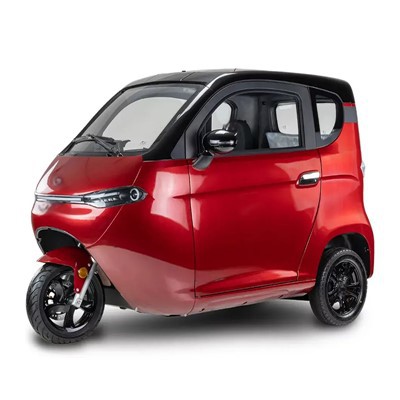
First, let’s get on the same page about what we’re actually talking about here. These aren’t full-size semi-trucks or even regular passenger cars. LSEDVs are usually limited to 25 mph max, built for short trips: dropping off Amazon packages at apartment complexes, refilling food carts at a college, delivering meds to a small hospital campus. They’re lighter than regular cars, usually under 3,000 lbs when loaded, but their job is way different than, say, a sedan commuting to work 50 miles a day. Their wheels are spinning all day, stopping and starting, navigating curbs, gravel, even snow or rain on back roads. And that’s where the tire problem starts—regular tires don’t stand up to that specific use case.
Wait, let’s break down why regular tires fail for these. I’ve seen a fleet with 10-month-old regular passenger tires get shredded just 6 months into a route because their drivers were constantly curbing at apartment building drop-offs. Regular passenger tires are built for smooth highways, right? The tread pattern is designed for low road noise and fuel efficiency, which makes sense for someone driving 60 mph on a main road. But LSEDV drivers aren’t doing that—they’re hitting 10-15 stop signs or driveways an hour, slamming on brakes to miss a kid on a bike, pulling up to curbs that are a little uneven. The tread on regular tires wears down way faster because it’s not made for that constant, abrupt friction. Also, regular tires have a stiffer sidewall, built to handle the weight of a 4,000-lb car going fast. Our LSEDVs only carry maybe 1,000 lbs of cargo max, so the sidewall doesn’t need that stiff stiffness—actually, it’s bad. A stiffer sidewall on a light car means more vibration, which makes the cargo shift more, and also makes the tire more prone to cracking when you’re bouncing over curbs. I’ve had a client lose $12k in perishable meds because a regular tire cracked, leaked air mid-delivery, and their car stopped on a country road 5 miles from the pharmacy. That’s the kind of cost that makes you go, “Wait, why didn’t we get specialized tires?”
Now, what do special tires for LSEDVs actually offer, that regular ones don’t? Let’s start with tread. Specialized low-speed delivery tires have a deeper, more rugged tread—usually a blockier pattern, designed to grip on those mixed surfaces: asphalt, gravel, wet grass, even light snow if you’re operating in colder areas. I know a college campus fleet that switched from regular tires to our recommended ones last winter; their flat rates went from 2 a week to zero. That’s a big win, especially for small businesses that don’t have time to swap tires every other week. Then there’s load rating. Wait, a lot of people miss this. LSEDVs carry heavy cargo—you’re stacking 50 lbs of grocery boxes, 10 lbs envelopes, maybe even a small fridge for an apartment move. Specialized LSEDV tires are rated for that fluctuating load, but they’re lighter than heavy-duty truck tires, which saves on battery life. Oh right, battery life! These are electric cars, so every pound you save matters. Regular truck tires are heavy, so they drain the battery faster. The specialized tires are built to be lightweight but strong, so you get more miles per charge—we’ve seen fleets get 15% more route time after switching, which means fewer stops to charge, more deliveries a day. That’s pure revenue, no extra cost.
Another big thing: puncture resistance. Last year, a construction site nearby had a fleet of LSEDVs delivering supplies for a local remodel. Their regular tires got punctured by loose nails left out on the job site—one a day, every day, for a week. They switched to puncture-proof specialized LSEDV tires, and after that, they went 2 months without a single flat. That’s a massive difference for a delivery company, because a flat tire doesn’t just mean a tow or a replacement—it means late deliveries, which equals angry customers, lost repeat business. Specialized tires have reinforced inner layers, usually made of synthetic rubber or nylon, that stop small objects like nails, glass, or even tree branches from poking through. And since LSEDVs are often on residential streets where random debris is everywhere, that’s not a luxury—it’s a requirement.
Wait, let’s address a counterargument I hear all the time: “Special tires cost more upfront, so why bother?” Yeah, they might be $20-$30 more per tire than regular passenger tires. But let’s do the math. A regular tire for an LSEDV lasts, on average, 10,000 miles. A specialized LSEDV tire lasts 25,000 miles. So over 10,000 miles, you pay $80 for a regular tire, vs $70 for a specialized one. Then add the flat rates: regular tires might have 2 flats in that 10k miles, each costing $50 to fix, plus the downtime cost—each flat takes 2 hours to fix, time you could’ve spent delivering, which for a driver making $18 an hour is $36, plus late delivery fees that average $100 a pop, times 2 fees. That’s $200 right there. The specialized tire has maybe 0.1 flats in 10k miles, so almost no extra cost. And the battery life: if you get 15% more route time, that’s 15% more deliveries a day, which is $150 extra revenue per vehicle, per week. That adds up fast—we have a fleet of 15 LSEDVs that made an extra $22k in a year just from switching tires. That’s not a “nice to have”—that’s a business investment, not an expense.
Also, let’s talk about compliance. Wait, a lot of people don’t know this, but in many states, LSEDVs have to meet specific tire standards to operate on public roads. If you’re using regular tires that don’t meet the speed and load rating standards, you could get ticketed. Last year, a delivery company in Chicago got 3 tickets for $150 each because their regular tires weren’t rated for the 25 mph max. The specialized tires we recommend are DOT-approved for low-speed electric vehicles, so you don’t have to worry about that headache. It’s just one more thing you don’t have to track.
Now, how do I know all this? Because I’m not just a guy who sells tires—I’m the guy who used to drive LSEDVs for a small delivery company back in 2020, before I started supplying them. I’ve changed tires on the side of a road at 10 pm in the rain, I’ve dealt with angry customers because of a flat, I’ve watched a company go out of business because they couldn’t keep up with delivery delays. So this isn’t just textbook science—this is real stuff, stuff that happens every day to the people using these cars.
Wait, let’s make sure I’m not leaving anything out. What if you’re just starting out, with one LSEDV, not a fleet? Does it matter? Oh yeah, even for single-vehicle operators. I have a friend who delivers flowers with his LSEDV, and he started with a regular tire. Last spring, he hit a pothole on a residential street, blew a tire, and missed a wedding delivery. He lost the $500 flower order, plus the client never rebooked, and he had to pay $120 for a tow and a new regular tire. He switched to the specialized tire, and a year later, he hasn’t had a single pothole-related issue. That’s $620 down the drain that he didn’t have to waste.
So, to wrap this up: low-speed electric delivery cars absolutely need special tires. Not just any tires—ones built for their unique use case: constant stop-and-go, mixed surfaces, fluctuating cargo loads, and electric battery efficiency. Skipping this will cost you more in flat rates, downtime, late fees, lost revenue, and even tickets than the small upfront cost of the right tires.

If you’re an LSEDV fleet owner, a small delivery business, or someone looking to outfit their first car, don’t make the same mistake I (and so many others) did when we first started. I’ve worked with thousands of operators across the country to pick tires that fit their specific routes—whether they’re delivering in a snowy college campus, a hot suburban neighborhood, or a busy downtown with lots of curbs. We can help you find the right set that works for your needs, no guesswork, no fluff. Just tell us what your routes look like, how many cars you have, and we’ll hook you up with the best tires at a price that makes sense for your business. Reach out to us to chat through your needs, no pressure, just real advice from someone who’s been there.
4-Wheel Electric Cargo- Pickup References
National Highway Traffic Safety Administration. (2022). Low-Speed Vehicle Safety Standards.
U.S. Department of Energy. (2023). Electric Light-Duty Vehicle Tire Efficiency and Durability Study.
Modern Tire Dealer. (2024). Specialty Tires for Urban Delivery Fleets.
National Association of College and University Business Officers. (2023). Campus Fleet Maintenance Best Practices.
Taizhou Xiangyuan New Energy Technology Co., Ltd.
As one of the leading low-speed electric delivery car manufacturers and suppliers in China, we warmly welcome you to wholesale cheap low-speed electric delivery car for sale here from our factory. All customized products are with high quality and low price. Contact us for pricelist.
Address: NO.7 HUANGJIN ROAD, METAL RESOURCES RECYCLING INDUSTRY BASE, LUQIAO, TAIZHOU, ZHEJIANG
E-mail: order@jiajiev.com
WebSite: https://www.jiajiev.com/
