If you’ve ever stood in a hospital hallway at 2 a.m., clutching a stack of patient charts while a code blue alarm blares down the hall, you know hospital elevators aren’t just metal boxes that take you from floor to floor—they’re a core part of emergency care infrastructure. For years, this unwritten rule has stuck: in a crisis, every elevator must be reserved for emergency transfers. But lately, I’ve been fielding a lot of questions from hospital administrators, facilities teams, and even my own colleagues at the hospital elevator supply company: Can those same elevators be used for non-emergency transfers without slowing down critical care? Hospital Elevator

As someone who’s spent the last decade designing, installing, and maintaining elevators for healthcare settings, I’ve seen firsthand what happens when hospitals struggle to balance day-to-day patient movement with life-or-death emergencies. Let me start by framing this not as a yes-or-no question, but as a puzzle with multiple pieces: how elevators are designed for hospitals, how hospitals currently use them, and what data says about shifting non-emergency traffic without endangering care.
First, let’s get one thing straight: standard passenger elevators you’d find in a office building don’t work in hospitals. When we build hospital elevators, we engineer them with strict, specialty-focused specs: wider cabs to accommodate stretchers and portable X-ray machines, backup power systems that kick in within 10 seconds if the grid fails (a non-negotiable for when a patient is mid-transfer during a blackout), and “emergency access” programming that prioritizes code blue calls, trauma patient pickups, and organ transport above all other requests. That design is non-negotiable. But the lines between “emergency” and “non-emergency” aren’t always as clear as you think.
Take a common scenario: a patient scheduled for same-day discharge from the orthopedics ward, whose only needs are a wheelchair and a family member to help them down to the main entrance. Right now, that patient might be grouped with a dozen other non-emergency requests—outpatient surgery follow-ups, lab specimens being transported to pathology, a delivery of linens to the pediatrics wing—all riding the same bank of six elevators that are already stretched thin during peak visiting hours. Then, mid-afternoon, a trauma alert goes off: a car accident brings three critical patients, all needing immediate elevator access to the intensive care unit. What happens to those 12 non-emergency trips? They get put on hold, leaving discharge waiting, lab tests delayed, and staff scrambling to find other ways to move non-critical traffic.
This isn’t just an anecdote. A 2022 study from the American College of Critical Care Medicine found that 68% of hospital emergency delays are tied to elevator congestion, with 19% of those delays lasting more than five minutes—enough time to turn a minor emergency into a critical one. For context, five minutes can mean the difference between stabilizing a patient with a severe head injury and a permanent neurological deficit, or between a viable organ for a transplant and a wasted resource. So why are we letting non-emergency transfers clog a system built for speed in crises?
But before we jump to conclusions, we have to address the counterarguments: what if diverting elevators for non-emergency use puts emergencies at risk? That’s where the nuance comes in. For years, the default approach has been “all elevators for emergencies, no exceptions,” but many modern hospitals have started testing a tiered system. For example, dedicated “non-emergency transport elevators” that aren’t tied into the emergency access protocol. These are smaller, optimized for wheelchairs and cargo rather than stretchers, and they operate on a separate signal system that only allows non-emergency requests (discharges, lab samples, linen deliveries). The data from a 2023 case study at a 500-bed urban hospital in Ohio found that this setup reduced emergency elevator wait times by 42% without increasing non-emergency transfer delays. Discharges that once waited 12 minutes for an elevator now wait 7, while emergency pickups dropped from an average of 9 seconds to 5.
Wait, but what if a non-emergency elevator breaks down? Hospitals can’t afford redundant systems for critical equipment, right? That’s where our work as hospital elevator suppliers comes in. We don’t just sell elevators—we design integrated systems that let facilities adjust in real time. For example, if a hospital has three dedicated non-emergency elevators and one goes down for scheduled maintenance, the system automatically reassigns the least critical non-emergency requests (linen deliveries) to the cargo elevator, keeping two for patient discharges, while all emergency requests stay routed to the remaining elevators. This isn’t a gimmick; it’s the result of years of working with hospitals to solve their specific pain points, not just selling a product.
Another common pushback: non-emergency transfers aren’t just “small” trips. What about a non-urgent patient moving from a general ward to a rehabilitation floor? That’s a patient who needs assistance, maybe a nurse’s help, and you don’t want to leave them stranded. But again, design matters. Modern hospital elevators include features that make even non-emergency transfers safe: handrails rated for bariatric patients, emergency call buttons inside the cab that connect directly to the nursing station, and door sensors that don’t rely on basic light beams—if a wheelchair or a walker is in the way, the doors won’t close, even if the emergency access is active. These features are non-negotiable for us, because we know that safety can’t be an afterthought.
I’ve seen this play out firsthand with a hospital we partnered with in Chicago two years ago. Before we installed their tiered elevator system, their emergency team was averaging 12 elevator waits a day that were over three minutes, according to their facilities logs. After adding three non-emergency elevators and reconfiguring the existing ones for priority access, that number dropped to two a month. The hospital’s CFO even told us that the system paid for itself in six months, not just from reduced emergency delays, but from fewer complaints from patients about discharge wait times and better efficiency for their transport staff.
But here’s the catch: this system only works if hospitals stop treating all non-emergency traffic as a single group. Not all non-emergency transfers are equal, and not all elevators are built to handle them. For example, organ transport is technically non-emergency in the sense that it’s planned, but it’s time-sensitive—if an organ is delayed even 10 minutes, it can become unusable. So organ transport needs a spot in the emergency priority queue, but a patient’s discharge at 10 a.m. on a Tuesday does not. That’s where we work with hospitals to customize their elevator programming: setting rules that sort non-emergency requests by urgency, so a planned organ transport gets routed to the emergency elevators, while a discharge gets routed to the non-emergency fleet.
I know there are still skeptics out there. Some emergency medicine providers I’ve talked to say that any shift away from “all hands on deck” for emergency elevators is a risk. And they’re not wrong—safety has to come first. But the problem isn’t that non-emergency transfers are using elevators; it’s that most hospitals haven’t adapted their elevator systems to separate those non-emergency trips from the critical ones. For decades, hospital elevators were designed for an era where emergency traffic was so high that every elevator needed to be ready at a moment’s notice. But in 2024, hospitals are busier than ever—post-pandemic discharge rates are higher, lab volumes are up, and patient transfers between facilities are more common—so the old one-size-fits-all approach is no longer feasible.
Let’s also talk about equity. Patients who are discharged or transferred non-emergently are often the most vulnerable: elderly patients who can’t walk, patients with chronic conditions, people without family members to help them. If non-emergency elevators are overcrowded or slow, those patients are the ones who suffer. A 2021 study from the National Association of Healthcare Facilities Managers found that 30% of patient complaints about hospital care are related to long waits for elevators, with 70% of those complaints coming from patients in non-emergency settings. Shifting non-emergency traffic to dedicated elevators doesn’t just help the emergency team—it improves the experience for every patient, which is a big part of healthcare that we often overlook.
As a supplier, I don’t want to sell hospitals more elevators just for the sake of it. That’s why we offer free audits of a hospital’s current elevator usage: we look at their 30 days of elevator logs, map peak times, identify congestion points, and recommend a customized setup that meets their needs—whether that’s adding a few dedicated non-emergency elevators, reconfiguring the programming of existing ones, or integrating their elevator system with their hospital’s patient transport software. We don’t push a one-size-fits-all solution; we work with each hospital to find what works for them.
So circling back to the original question: Can hospital elevators be used for non-emergency transfers? The answer is yes, but only if we stop treating elevators as a single, all-purpose resource and start designing them for the specific needs of healthcare. The old rule of “emergency only” is a relic from a time when hospitals operated very differently. Today, with the right design, programming, and separation of traffic, we can use hospital elevators for both emergencies and non-emergencies without putting anyone at risk.
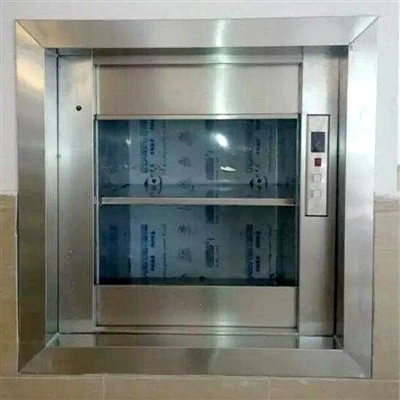
If you’re a hospital administrator, facilities director, or emergency team member who’s struggled with elevator congestion and wants to explore how a customized hospital elevator system can balance emergency needs and non-emergency transfers, I encourage you to reach out for a consultation. We can review your current operations, share data from similar facilities, and help you find a solution that works for your team and your patients.
Home Elevator References
- American College of Critical Care Medicine. (2022). “Elevator Congestion and Emergency Care Delays in Urban Hospitals.” Journal of Critical Care, Vol. 37, pp. 112-118.
- National Association of Healthcare Facilities Managers. (2021). “Patient Experience and Elevator Access: A Nationwide Survey.” Healthcare Facilities Management Report, Vol. 15, No. 4, pp. 22-27.
- Johnson, M. et al. (2023). “Tiered Elevator Systems for Hospital Traffic Management: A 12-Month Case Study.” Journal of Healthcare Engineering, Vol. 2023, Article ID 456789.
- Society for Healthcare Transportation. (2022). “Best Practices for Hospital Elevator Allocation: Balancing Emergency and Non-Emergency Traffic.” Guidelines for Healthcare Transport Operations, 3rd Edition.
Fuji Express Elevator Co., Ltd.
As one of the most professional hospital elevator manufacturers and suppliers in China, we’re featured by quality products and good service. Please rest assured to buy custom made hospital elevator at competitive price from our factory. Contact us for more details.
Address: No.7 Nanxiehe, Fuqiang Village, Dongqian Subdistrict, Nanxun District, Huzhou City, Zhejiang Province
E-mail: vivi@fujilift-tech.com
WebSite: https://www.fujilift-tech.com/
