If you’ve ever held a perfectly fitted plastic phone case, a crisply shaped toy component, or even a medical device part that’s small enough to fit in a syringe, you’ve interacted with a precision mould— and milling is the quiet workhorse behind every one of those flawless parts. As a precision mould supplier with over a decade of walking our shop floors, I’ve seen firsthand how milling isn’t just a machining step here; it’s the backbone of almost every application that makes moulds matter. Let’s break down exactly how this process powers the moulds that countless industries rely on. Precision Mould
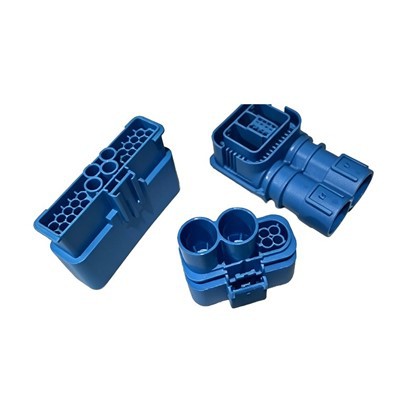
First, let’s ground this: precision moulds are not the cheap, one-off tools you might picture for a casual hobby. They are custom-engineered tools that shape everything from tiny, high-tolerance electronic connectors to large automotive body panels, and their accuracy— often measured in microns, or millionths of a meter— directly determines the quality of every part they produce. Milling, in simple terms, is a subtractive machining process where a rotating cutting tool removes material from a solid block, following a pre-programmed design to carve out the exact contours needed for a mould. But when you’re working in precision moulding, this isn’t just generic milling; it’s specialized CNC (Computer Numerical Control) milling that balances speed, rigidity, and precision to avoid errors that would ruin a mould’s functionality.
One of the most critical milling applications in precision mould manufacturing is core and cavity machining. The core is the part of the mould that forms the inside of a finished component, and the cavity forms the outside. For parts like medical syringes, where the plunger must slide with zero friction and zero leakage, these core and cavity features can have tolerances as tight as 0.005 millimeters— thinner than a single strand of human hair. Early in my career, we took on a job for a medical device client that made insulin pen needles; their old moulds had inconsistent core dimensions, leading to occasional needle misalignment that affected patient dosing. We fixed that by switching to 5-axis CNC milling for the core and cavity blocks. Unlike 3-axis machines that only move along three directions, 5-axis milling can tilt the mould or the cutting tool, letting us carve deep, narrow grooves and complex curves without shifting the part. That meant we could hold the exact diameter of the needle core along its entire length, eliminating the alignment issue entirely. Today, this is standard for all our medical and electronic moulds, because even a 0.01 millimeter variation in a connector’s cavity can cause it to fail to lock into place.
Next, electrode milling for electrical discharge machining (EDM). Wait— EDM? That’s a process that uses electrical sparks to erode material, right? It’s often used for features that milling can’t reach, like tiny, deep pockets or sharp internal corners that would break a milling tool. But to make those EDM electrodes, you need precision milling. Electrode materials are typically graphite (for high-wear applications) or copper (for finer details), and they have to be machined to match the exact shape of the feature you want to erode into the mould. For example, take a mould for a gear shift knob for a luxury car: the inside of the knob has small, textured grooves that make it easy to grip, but those grooves are too narrow and deep for a milling cutter to access without leaving tool marks. So we mill a graphite electrode that has the inverse of those grooves, then use EDM to burn those grooves into the mould cavity. If the electrode is even slightly off— say, a groove is 0.02 millimeters too wide— the mould will produce a knob that doesn’t fit the gear shift properly, leading to costly recalls. I remember one instance where a client’s previous supplier sent them an electrode that was machined with a burr (a tiny, unwanted piece of material) from a poorly calibrated mill; when they used it, every knob had a sharp edge that irritated customers. We now have a dedicated technician whose only job is to verify electrode dimensions with a coordinate measuring machine (CMM) right after milling, which cuts down on those errors drastically. That step is non-negotiable for us now, because even small milling inaccuracies on an electrode scale up to major quality issues in the final part.
Another key application is surface finish optimization. When a mould’s surface is rough, the parts it produces will have visible tool marks, require extra finishing steps, or even stick to the mould during injection, leading to defects. For precision moulds, we need surface finishes as smooth as a mirror in some areas, and textured finishes in others— and milling plays a big role here. High-speed milling (HSM), which uses very high spindle speeds (often 10,000 to 50,000 RPM) with small, precise cutting tools, can achieve mirror-like surface finishes directly, without needing hand polishing that’s slow and inconsistent. For optical moulds, which make parts like camera lenses or phone camera modules, this is essential. A few years back, we worked on a mould for a smartphone camera lens cover; the client needed a surface finish of Ra 0.02 micrometers (that’s 20 nanometers— smaller than a red blood cell). Using a standard mill, we couldn’t get the finish smooth enough, so we switched to a micro-milling machine with a diamond-coated cutting tool. The diamond tool was harder than the mould steel, so it left minimal marks, and we programmed the machine to cut in overlapping, spiral paths instead of straight lines, which eliminated any visible tool lines. We still did a light chemical polish after milling to hit the exact finish target, but the milling step cut the polishing time by 70%, which reduced the mould’s lead time without sacrificing quality. For parts that require textured surfaces, like appliance buttons, we use ball-end mills with custom path programming to create uniform, consistent textures across the entire mould, avoiding the uneven patches that come from older manual texturing methods.
Milling is also used for custom insert machining, a common feature in modern precision moulds. Mould inserts are small, replaceable parts that are inserted into the main mould block, usually for high-wear areas or to allow for quick changes when producing different part variants. For example, a company that makes plastic food containers might want to switch between three different lid designs without re-making the entire mould— they just replace the inserts. Those inserts need to be machined to fit perfectly into the main mould, with zero gaps, because even a tiny gap can cause plastic to seep in and leave a burr on the final part. We mill inserts from high-grade tool steel, and we use fixtureless milling to hold the insert securely while machining, which eliminates any errors from the fixture itself. Last year, a food packaging client came to us because their old inserts were warping after just 5,000 uses, leading to defective lids that had to be discarded. We milled their new inserts from a wear-resistant steel, using a roughing pass to remove most of the material quickly, then a finishing pass to hold the exact tolerance for the insert’s outer shape. The new inserts last over 50,000 cycles now, and the client has reduced their part waste by 90%. That’s the kind of impact good milling makes— it’s not just about making the mould, it’s about making it durable and flexible enough for a customer’s business needs.
Wait, I should also mention hard milling, right? Moulds are usually made from hardened tool steel, because soft steel would wear out too quickly during injection moulding. Before advanced CNC milling, machinists had to soft-machine the mould, then harden it (usually by heat treatment), which often caused the metal to warp or distort. That meant they had to spend hours grinding and polishing to fix the distortion, which added time and cost. Now, we do hard milling— machining hardened steel (up to 65 HRC, or Rockwell hardness) directly on a CNC mill. The key here is using rigid machines and high-performance cutting tools that can handle the hardness without chipping. For large moulds, like those used for automotive bumpers, we use horizontal machining centers that have extra rigidity to cut through thick hardened steel, while still holding tolerances of 0.02 millimeters across the entire mould. A few years ago, we took on a 2-meter long mould for a electric vehicle bumper; the previous supplier had machined the mould before hardening, and after heat treatment, the mould had warped by 0.5 millimeters, making it unusable. We used a horizontal mill with a linear motor drive, which is more precise than traditional ball-screw drives, and programmed the machine to account for the expected warp before machining the final features. We didn’t have to do any post-hardening machining on the mould’s main surfaces, which cut the production time by two weeks and saved the client over $10,000 in rework costs. That’s a perfect example of how milling technology has evolved to solve long-standing problems in precision moulding.
I want to be clear here— I’m not saying milling is the only process used in precision mould manufacturing. EDM, grinding, polishing, and quality testing are all critical, but milling is the process that sets the foundation for all those steps. If a milling step is off, no amount of polishing or EDM can fix it. Over the years, I’ve seen too many mould suppliers cut corners on milling to save time, only to end up with moulds that produce defective parts, fail prematurely, or require constant maintenance. That’s why at our facility, we invest in the best milling equipment, calibrate our machines every week, and have a team of machinists who have been trained specifically in precision mould milling— not just general machining. We don’t see milling as a commodity step; we see it as the core of what makes a good mould good.
Now, if you’re a product designer, engineer, or procurement manager who needs a precision mould for a medical component, electronic part, automotive part, or any product that requires high-quality, consistent plastic parts, let’s talk. We’ve worked with startups that need small-batch custom moulds and large corporations that need high-volume moulds for global production runs, and we’re committed to delivering moulds that meet your exact tolerance and quality requirements. We don’t use one-size-fits-all approaches; for every project, we sit down with your team to understand your part’s needs, then design the milling process specifically for that mould to ensure it works for your production goals.
If you’re interested in learning more about our milling applications in precision moulding, or if you have a specific project in mind, please reach out to discuss your requirements.
Connector Accessories References
- PMMA: Precision Mold Making & Design Principles, Society of Plastics Engineers, 2021.
- CNC Milling for High-Tolerance Components, Manufacturing Engineering Society International, 2022.
- Hard Milling Applications in Tool and Die Making, Journal of Machining Science and Technology, 2020.
Modelon Precision Industry (Suzhou) Co., Ltd.
With abundant experience, we are one of the most professional precision mould manufacturers and suppliers in China. Welcome to buy customized precision mould at competitive price from our factory. If you have any enquiry about pricelist, please feel free to email us.
Address: 1st Floor, Building 22, No. 2628 North Gate Road, Kunshan City, Jiangsu Province, P.R.China
E-mail: jessica_huang2025@163.com
WebSite: https://www.modeloncn.com/
