Hey guys, let’s cut to the chase – if you’re working in scaffolding, you know that a wobbly scaffold board isn’t just annoying, it’s a straight-up safety hazard. I’ve been in the scaffolding board game for almost 12 years, first on job sites helping my crew set up, now running the supplier side of things, so I’ve seen it all: shortcuts that saved 10 minutes but almost got someone hurt, cheap fasteners that rusted out in a year, and even boards that were stacked wrong and slipped mid-job. Today we’re talking about how to secure your scaffold boards the right way – no fluff, no corporate jargon, just stuff that’ll keep you (and your team) safe all day. Scaffolding Boards

First off, let’s start with the basics because so many people skip this part: the boards themselves. Not all scaffold boards are created equal, and if you’re using the wrong kind or damaged ones, even the best securement will fall flat. I’ve seen guys grab random 2x10s from a supply store because they were cheaper – big mistake. Scaffold boards (we call them planks on most sites) need to be load-rated, right? For light duty like painting or small repairs, that’s usually the standard 38mm thick, 225mm wide softwood ones; for heavy stuff like bricklaying or moving materials, you need 50mm thick, same width. And check for defects before you even pick one up: knots bigger than a cricket ball, splits longer than a foot, or boards that are warped so bad you could balance a marble on the edge? Toss ‘em. Damaged wood is weak, so securing it won’t fix the structural issues.
Now, when you’re placing the boards on the frame – this is step one of securement, even before you add fasteners. The golden rule here is overhang. I don’t care what some old guy on your crew says, don’t let boards stick out more than 150mm (that’s 6 inches for my US folks) past the end of the scaffold frames. Wait, let me say that again: max 150mm overhang. Any more than that, and the board acts like a lever – if you step on the end, it’ll flip up or slip off. I learned this the hard way early on: a new hire put a 300mm overhang on a set of boards, stepped on the far end, and went down 8 feet into a flower bed. No broken bones, but he was lucky, and I was pissed. Also, never butt two boards together over only one frame – they need to overlap at least 200mm (about 8 inches) when they meet. So if your frames are 1.5m apart, the two boards meet right in the middle of that gap, each overlapping 200mm on their respective frames. That joint is way stronger, and less likely to shift as people walk across.
Okay, now the actual securement part – this is where most people mess up, and where the right tools matter. Let’s start with what NOT to use. Zip ties? Don’t even get me started. Yeah, they hold for a day, but UV light makes them brittle, and one hot day they’ll snap. Nails? Maybe for temporary setups, but if that scaffold’s going to be up for more than a week, nails pull out. Even screw guns – regular wood screws can work, but only if you use the right ones. Wait, the go-to for proper, long-lasting securement is scaffold clips. We stock these at our company, and I swear by ‘em. They’re made of galvanized steel, so they don’t rust, and they clamp right over the edge of the scaffold frame and the board. One clip per end, right at the frame – that’s it. No fumbling, no hunting for tools, and they take 2 seconds to put on. For the overlapping joints I mentioned earlier, add a single clip across both boards where they meet on the frame – that stops them from sliding side to side, which is another super common issue.
Wait, hold on, let’s talk about different scaffold types because this changes things a little. If you’re using a tube and coupler scaffold, that’s the traditional metal frame one, clips work the same. But if you’re on a system scaffold (the newer, modular kind with snap-together frames), you might have built-in notches for the board ends, so you just drop the board in, then add a clip over the notch. Easy. But what if you’re on a mobile scaffold? Those guys are way easier to tip, so securement here is non-negotiable. Not only do you need clips, but if the mobile unit’s going to be on uneven ground, chock the base plates too – a wobbly base makes wobbly boards, no matter how many clips you use.
Another big one people forget: check your securement every single time before the workday starts. I’m not kidding – 5 minutes of inspection can save a life. Here’s my quick go-to check list: 1) Are the boards sitting tight, no gaps between the board and the frame? A gap means they can shift. 2) Are the clips fully closed, not bent or missing? I go around my own job sites before shift start, and I can’t tell you how many times I’ve found a clip that fell off over night, or a board that shifted because someone bumped it the day before. 3) Are there any damaged boards I missed earlier? Rain makes wood swell, then shrink when it dries, so that small split on Monday could turn into a big split by Wednesday.
Wait, let’s address the cheap alternative that’s super tempting. I know, the cheap plastic clips that are half the price of galvanized steel ones. Don’t do it. I had a customer a few years back who bought a bulk load of those, saved like $200, and by week three half the clips were broken. He had to shut down his job site for a day to re-secure everything, which cost him way more than he saved. Scaffold clips aren’t a markup – they’re an investment. Our steel ones last years, not weeks, and they’re designed to hold the maximum load the board’s rated for. That’s not a sales pitch, that’s fact. I’ve tested these clips myself – I stood on a set of boards with our clips, jumped a little, no movement. Try that with a plastic clip, and it’ll snap.
Also, let’s talk about what not to put on the scaffold boards. Even if they’re secured perfectly, if you overload them, they’ll bend or break. The load rating is on the board – for a standard softwood board, that’s 1.75 kN per square meter, roughly 180 kg. So don’t stack 5 buckets of mortar, a wheelbarrow, and two guys on one 1.5m board. That’s asking for trouble. And if you have any tools, debris, or materials on the boards, clear them off at the end of the day – wind can blow stuff around, create uneven weight, and even knock boards loose.
Wait, I should mention temporary setups too. If you’re doing a one-day gutter repair or something, and you don’t want to haul out a bunch of clips, what’s the right workaround? Don’t nail the boards to the frame. Again, nails pull out. Instead, use a scaffolding strap or a heavy-duty bungee cord, wrapped tight around the board and the frame. But only for temporary use, max a day or two. And make sure the bungee isn’t stretched so tight it breaks, and that the strap isn’t frayed. But for any setup longer than a weekend, clips are non-negotiable.
I’ve seen way too many incidents over the years. Last year, a guy I knew was working on a 3-story scaffold, and his boards weren’t secured. He stepped to reach a window, the board slid, and he fell 10 feet, broke his wrist and his ankle. The guy running the job got fined, and the worker ended up with months of medical bills. That’s all because they cut corners on securement. It’s not rocket science, but it’s not something you can half-ass either.
Let me circle back to the product side, since that’s what I do. We don’t just sell scaffold boards – we sell the right boards for the job, and the right securement stuff to go with ‘em. All our boards are pressure treated, so they resist rot and warping, and we mark every single one with its load rating right on the end, so you don’t have to guess. Our galvanized steel clips are tested to meet OSHA and EU safety standards, so you know they’re going to hold. And if you’re not sure what you need – like, how many clips per board, what size overhang, or what board works for your project – just hit us up. We’ve got people on our team who were scaffold hands themselves, so they don’t just read safety manuals – they know what works on a real job site, not just a textbook.
Wait, one last tip I learned from an old foreman who’s been in the game for 40 years: when you’re setting up boards, always work from the inside out. That way you don’t have to step on a board that’s not secured yet, and you’re less likely to knock something loose as you go. I still do this every time I set up, and it’s saved me from stepping on a half-placed board more times than I can count. Also, if you’re working alone, use a ladder or a helper to pass you boards, don’t try to carry three up at once and balance them – that’s how you drop a board on someone’s head, or drop the board off the scaffold.
Let’s recap the key stuff so you don’t have to flip back: 1) Use load-rated, undamaged scaffold boards, no random lumber. 2) Never have more than 150mm overhang, overlap joints by at least 200mm. 3) Use galvanized steel scaffold clips, not plastic, not zip ties, not nails, for all permanent setups. 4) Inspect the entire scaffold board securement before every workday. 5) Don’t overload the boards, clear debris at the end of the day. 6) Work safely, from the inside out, no shortcuts.
Look, I get it – every job has a tight deadline, every foreman is trying to save time and money. But the time you save cutting corners on securement is nothing compared to the time you’ll lose if someone gets hurt, or the money you’ll pay in fines, medical bills, or legal fees. We’ve all been there, rushing to get the job done before the rain, but safe is fast, too. You don’t have to spend hours securing boards, but you do have to do it right.
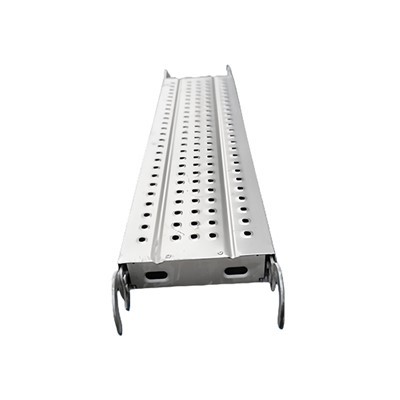
If you’re running low on scaffold boards, clips, or any other scaffolding supplies, or you just need a second opinion on your setup, get in touch with our team. We don’t do pushy sales stuff – we work with small contractors and big construction crews alike, and we’ll help you figure out exactly what you need, no hidden fees, no confusing jargon. Just give us a shout, and we’ll get back to you fast.
Steel Scaffold Plank References:
- Occupational Safety and Health Administration (OSHA). Scaffolding Standard 1926.451 – General requirements for scaffolds.
- European Committee for Standardization (CEN). EN 12811-1:2003 – Temporary works equipment – Scaffolds – Part 1: Performance requirements and general design.
- Scaffold Industry Association (SIA). Best Practices for Scaffold Plank Installation and Securement.
- National Center for Construction Education and Research (NCCER). Scaffolding Level 1 Trainee Guide, 5th Edition.
Jiangsu Jiasidun Machinery Equipment Co., Ltd.
As one of the leading scaffolding boards manufacturers in China, we warmly welcome you to buy bulk cheap scaffolding boards for sale here from our factory. All customized products are with high quality and low price. Contact us for pricelist and quotation.
Address: No. 8, Yanjiang Road, Hongqiao Town, Taixing City, Jiangsu Province
E-mail: jsjsd888@163.com
WebSite: https://www.cnjsdjx.com/
