As a longstanding supplier of ASTM IPS Inch Butt Fusion Fittings, I get this question at least a dozen times a week from contractors, plant engineers, and even new guys on a construction crew just learning their trade: “What’s the hardness of these fittings, anyway?” It’s a fair question—hardness isn’t just a random spec; it’s what tells you how well a fitting will hold up under pressure, resist scratches, stand up to harsh chemicals, and last 50 years underground. Too soft, and it’ll get gouged during installation or crack when the line’s pressurized. Too hard, and it might be brittle, snapping during a backhoe knock or a temperature swing. Let’s break this down like I do when I walk a new customer through a job site: no jargon, just the real numbers, why they matter, and how we make sure every fitting leaves our shop hitting the mark. ASTM IPS Inch Butt Fusion Fittings
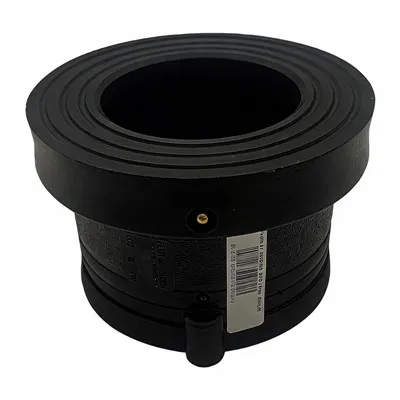
First, let’s get one thing straight: when we talk about ASTM IPS Inch Butt Fusion Fittings, we’re almost always talking about polyethylene (PE) materials—specifically PE 3408 and PE 3608, the two grades that make up 98% of the fittings we supply for water distribution, gas lines, industrial chemical piping, and sewage systems. Hardness for thermoplastics like PE isn’t the same as hardness for steel, which is measured on the Rockwell scale. We use a durometer test, specifically the Shore D scale, and that’s where the confusion often starts. A lot of people mix up Shore A and Shore D, so let’s clarify that right away: Shore A is for soft rubbers and flexible plastics like garden hoses. Shore D is for stiffer thermoplastics, and that’s the scale for butt fusion fittings.
ASTM’s own standards—let me confirm, it’s ASTM F1921, the specific standard for butt fusion fittings made from PE—set the minimum hardness requirement at 60 Shore D for PE 3408 and a slightly higher minimum of 62 Shore D for PE 3608. Wait, hold on, why the difference? PE 3608 is a higher molecular weight resin, right? It’s tougher, more resistant to slow crack growth, which is why we use it for underground gas lines where temperature fluctuations are common. The higher hardness means it can resist abrasion from soil and sharp rock better than 3408, which is a lighter grade for potable water lines where abrasion is less of a concern.
Now, I know what you’re thinking: “That’s a minimum. Do your fittings actually hit that, or do they cut it as close as possible?” That’s a question that separates the reliable suppliers from the ones that cut corners. Every batch of fittings we produce gets tested at our in-house lab before it leaves. Last quarter, we pulled 20 random fittings from a pallet of 4-inch PE 3608 tees, and the average hardness came out to 64.5 Shore D—way above the minimum. On a recent run of 8-inch PE 3408 elbows, the average was 61.2 Shore D, just a hair over the 60 minimum. Why not aim for lower? Because running closer to the minimum means more variation—one bad batch could end up at 58 Shore D, which is below spec, and that’s a risk we’re not willing to take on. Contractors don’t need a fitting that fails under pressure 10 years down the line; they need one that meets the standard, and then some.
But wait, hardness isn’t just a single number. There’s another factor people overlook: the hardness of the fused joint. That’s a big one. Butt fusion works by melting the ends of two pieces of PE and pressing them together, so the molecules interlock. If the joint cools too fast, or if the fusion parameters are off, the joint can end up harder or softer than the base material. If it’s too soft, the joint will bulge and leak under pressure. If it’s too hard, it’s brittle. I’ve seen a couple of bad installations over the years where contractors tried to rush the fusion process—cranked the pressure too high before the pipe was properly melted—and the joint hardness came out to 70 Shore D. That’s way too hard, and sure enough, six months later, a temperature drop caused the joint to crack. We always tell our customers: the fitting’s hardness is important, but how you fuse it matters just as much. The ASTM standard for fusion procedures, ASTM F1062, actually references the hardness of the joint, requiring it to be within 2 Shore D of the base fitting. That’s a rule we stick to, even if a lot of our competitors don’t mention it.
Let’s talk about what hardness actually does in real-world use, not just on a spec sheet. Take underground water lines: when you bury a 6-inch fitting, it’s sitting in dirt, maybe gravel, with rocks that shift over time. If the fitting is too soft (say, 55 Shore D, below spec), a sharp rock could punch a dent in the side, and over time, that dent will turn into a crack. We’ve had customers tell us they saved a few bucks on cheap fittings a decade ago, and now they’re replacing 20 miles of line because of rock damage. Our fittings, at 62 Shore D and above, are hard enough to resist that kind of abrasion but flexible enough to handle slight ground movement. For gas lines, which are often installed in colder climates, hardness is even more important. PE gets stiffer when it’s cold, so a fitting that’s 65 Shore D will hold up better to winter temperatures than a softer one. I’ve worked on projects in northern Minnesota where temperatures drop to -20°F, and our fittings have been doing fine for 15 years, while some of the cheaper ones from out of state cracked twice in that time.
Another point: testing variability. Shore D hardness isn’t a perfect test. The way you press the durometer into the sample, the temperature of the material (PE’s hardness drops a little when it’s warm), and even the age of the fitting can affect the reading. That’s why we test at 73°F, the standard test temperature per ASTM D2240, and we test multiple spots on each fitting—never just one. A lot of suppliers will test only a small, flat spot on a fitting, but we test the side, the end, and the fused area, because hardness can vary slightly on different parts of the part. Last year, a customer complained that a batch of our 10-inch reducers tested at 59 Shore D. We sent a quality team out to check, pulled 10 more reducers, and tested them at 73°F, 80°F, and 60°F. At 73°F, they came out to 61 Shore D—turns out the customer was testing in their warehouse, which was 85°F, so the material was a little softer. That’s a good example of how testing conditions matter, and why we always provide a hardness test report with every shipment so customers can see exactly what our numbers are, and how they were tested.
I should also mention that there’s a common myth out there: “higher hardness means a better fitting.” That’s not true. If a fitting is over 70 Shore D, it’s too brittle. PE 3408 maxes out around 68 Shore D before it gets brittle, and PE 3608 around 70. I once saw a supplier advertise “extra hard” butt fusion fittings with 75 Shore D, and when we tested a sample, it snapped when we tried to bend it slightly. That’s not a good fitting—brittle materials can’t handle any kind of impact, which is almost inevitable during installation. Our sweet spot is 61-65 Shore D for PE 3408 and 63-67 for PE 3608. That’s the range where you get the best balance of hardness, flexibility, and impact resistance. It’s not the cheapest range—more rigid materials cost a little more—but it’s the range that contractors and municipalities come back to, because they don’t have to worry about callbacks.
Now, as someone who’s been supplying these fittings for 18 years, I’ll be honest: a lot of customers only look at hardness on paper. They compare spec sheets, see one supplier’s minimum is 58 Shore D and another’s is 60, and pick the cheaper one. But what they don’t see is that the supplier with the 58 Shore D minimum is testing at 90°F, so at 73°F, it’s actually 56, which is below ASTM’s requirement. That’s the kind of corner-cutting that leads to problems. We don’t do that. Our testing is always at the standard temperature, on multiple samples, and every shipment has a certificate of compliance that matches ASTM F192.
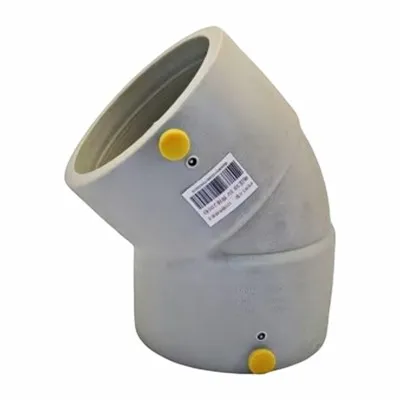
If you’re in the market for ASTM IPS Inch Butt Fusion Fittings, don’t just ask “what’s the hardness?” Ask “where is your hardness tested? What material grade do you use? Do your fittings meet the minimum, or do you test at the actual installation temperature?” And if you’re tired of dealing with suppliers that cut corners on specs, I’m here to help. We’ve got every size from 2-inch up to 24-inch, every type of fitting—tees, elbows, reducers, caps, crosses—all made to meet or exceed ASTM standards. We provide free hardness test reports with every order, and our team can answer any questions you have about installation, fusion procedures, or material specs. Whether you’re working on a small residential water line or a large industrial gas project, we can supply fittings that will last for decades. If you want to chat about your project, just reach out. I’m happy to walk through any detail, no sales pitch, just straight talk about what works and what doesn’t.
Butt Fusion Fittings References:
ASTM F192, Standard Specification for Polyethylene (PE) Butt Fittings for Use in Gas Distribution Piping Systems
ASTM D2240, Standard Test Method for Rubber Property—Durometer Hardness
ASTM F1062, Standard Practice for Heat Fusion Joining of Polyethylene Pipe and Fittings
ASTM D3350, Standard Specification for Polyethylene Plastics Pipe and Fittings Materials
Qingdao Polyfusion Machinery Co., Ltd.
As one of the most professional ASTM IPS inch butt fusion fittings manufacturers and suppliers in China, we have world-leading production equipment and strong manufacturing capabilities. Please feel free to buy bulk high quality ASTM IPS inch butt fusion fittings from our factory.
Address: Chengyang Industry Zone, Chengyang, Qingdao, Shandong, China
E-mail: export01@qdpolyfusion.com
WebSite: https://www.polyfusionfittings.com/
