Hey everyone, it’s Jake here—one of the guys over at the Aluminum CNC Machine supplier team. If you’ve spent any time around metal fabrication, you’ve probably wondered this at least once: can an aluminum CNC machine actually do engraving? Let me cut to the chase: the short answer is yes, but there’s a lot more to it than just slapping a design into the software and hitting “run.” I’ve had customers ask me this a hundred times, from small custom jewelry makers to aerospace prototypers, so I’ve got hands-on experience with what works (and what totally messes up your machine or your finished part). Let’s break this down like we’re chatting over a coffee, no stuffy engineering jargon that makes your eyes glaze over. Aluminum Cnc Machine
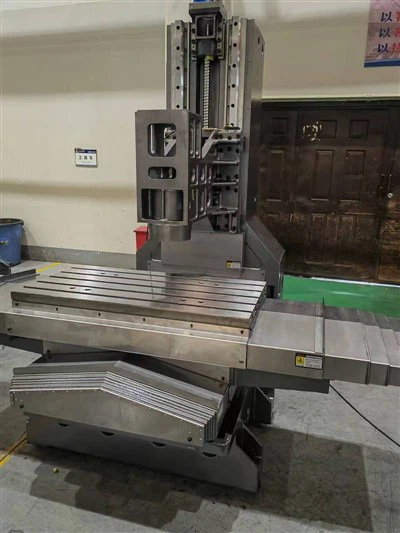
First, let’s clear up a common mix-up: not every aluminum CNC machine is built the same. Some of our clients come in thinking, “I bought a basic desktop CNC for wood, can I engrave aluminum with it?” Spoiler: probably not. Wait, why? Aluminum is a soft but tricky metal—way harder on cutters and machine components than wood or plastic. A basic wood CNC might have a cheap spindle, wobbly axes, and run at way too fast a speed for delicate engraving. Our aluminum CNC machines, though? We build them with engraving specifically in mind, not just heavy duty milling. Let’s talk spindle speed first. Engraving isn’t cutting thick chunks of aluminum down to size—it’s shallow, precise cuts, right? For aluminum engraving, you need a spindle that can push 12,000 to 24,000 RPM. A wood spindle might max out at 10k, which will just gum up the cutter with aluminum shavings, overheat, and dull your bit in 10 minutes flat. That’s a huge waste of time and money, so trust me, spindle specs matter here.
Next up: tooling. Engraving aluminum is all about the bits you use, and this is where a lot of new folks mess up. You can’t use the same end mill you use for cutting 1-inch aluminum sheets for engraving. Engraving bits are smaller, way sharper—usually diamond-coated or solid carbide, with a 2-flute design (not 3 or 4). 2-flute bits are better for aluminum because they clear chips faster; fewer flutes mean less friction, which keeps the cutter cooler and prevents those ugly, rough edges on your engraving. We even stock custom engraving bit sets for our machines because I’ve seen customers burn through generic bits trying to get clean designs. Another pro tip: if you’re doing deep engraving (like, say, a logo that’s 1mm deep, not a light etch), you’ll want to use a smaller stepover—like 0.1mm to 0.2mm per pass—instead of taking a big cut. That keeps the bit from breaking and gives you way more detail. I had a customer last month try to engrave a 3mm deep logo in one pass, and he snapped a $120 carbide bit in half. Total rookie move, but hey, we’ve all been there.
Now, what kind of engraving are we talking about? Because that changes how your machine is set up. There are two main types: surface engraving (like adding text or designs to a flat aluminum plate, common for name tags, tool parts, or jewelry) and deep engraving (think custom aluminum phone cases, automotive badges, or decorative panels). Our aluminum CNC machines handle both, but deep engraving needs a bit more care. For surface engraving, you can run a bit faster—15,000 to 20,000 RPM, with a feed rate of 500 to 1,000 mm per minute. For deep engraving, drop that speed a little to 10,000 to 15,000 RPM, and slow the feed rate way down, like 200 to 500 mm per minute. That keeps the bit from overheating and gives you crisp, clean lines, not fuzzy ones. Also, don’t skip the coolant! Aluminum shavings melt super easy when they’re friction-heated, and if they stick to the bit or the part, they’ll ruin your engraving. A lot of small shop owners forget this, but mist coolant or even a squirt bottle works (just make sure it’s non-corrosive for aluminum) to keep everything smooth.
Wait, but can you use a machine that’s not strictly an aluminum CNC for engraving aluminum? Let’s be real—if you have a mid-range 3-axis machine, not our heavy industrial one, can you do small engraving jobs? Maybe, but the quality will be hit or miss. A friend of mine has a hobbyist CNC from a big box store, and he tried engraving aluminum keychains. The results were okay, but the edges were rough, and the cutter broke after 5 keychains. For consistent, high-volume engraving (like if you’re doing 100 name tags a week), you need a machine built for that. Our machines have linear guides instead of ball screws, which are way more precise and don’t wear out as fast with repeated engraving cuts. We also have closed-loop stepper motors, so you don’t get those weird “lost step” errors that mess up your design halfway through a big engraving job. That’s the difference between a $500 hobby machine and a $5,000 aluminum CNC machine—consistency.
I should also mention a common mistake people make with software. You can’t just upload a JPG of a logo and expect the CNC to engrave it—you need to convert it to a vector file, like SVG or DXF, that the CNC software can read. And when you’re setting up your engraving toolpath, make sure you select “engraving” mode, not “milling” mode. Milling mode will cut too deep too fast, which is bad for engraving. We have a free software guide for all our customers that walks through how to set up engraving jobs, and I’ve helped at least 20 people get their first engraving project right using it. It’s way simpler than it sounds, I promise.
Let’s talk real-world examples to make this concrete. A customer of ours, a small luxury watch maker, uses our aluminum CNC machines to engrave custom serial numbers and design details on watch cases. He was using a laser engraver before, but the laser left a faint etch that scratched off easily. With our CNC, he gets a deep, crisp engraving that’s durable enough for daily wear. Another customer is a aerospace parts supplier who engraves part numbers and heat treatment codes on aluminum brackets—they needed something that could handle hundreds of parts a day, no downtime, so our machines’ precision and spindle speed make perfect sense for them. Even hobbyists come in: a guy who makes custom aluminum beer taps for craft breweries swears by our machines, because he can engrave each brewery’s logo exactly how he wants it, no blurry edges.
Now, what are the limitations? Let’s not sugarcoat it—aluminum CNC engraving isn’t for super tiny, super detailed stuff that fits in a nano-scale. If you’re trying to engrave a design smaller than 0.5mm, you might struggle with even a good machine, because the bit is too small and prone to breaking. Also, soft aluminum alloys (like 6061) engrave way better than hard alloys (like 7075), because hard aluminum is more abrasive and dulls bits faster. If you’re using 7075, you’ll need diamond-coated bits instead of solid carbide, and even then, you’ll go through bits quicker than with 6061. That’s a good tip to keep in mind when you’re picking your material.
Another thing: dust and chips management. When you engrave aluminum, you get fine metal chips that are super sharp and can get inside your machine’s moving parts if you don’t have a good dust collector. Our aluminum CNC machines come with built-in chip evacuation systems that suck those chips right out, so you don’t have to stop every 10 minutes to clean the machine. That’s a huge time-saver for anyone doing more than a few engraving jobs. I’ve seen other machines where chips build up and jam the axes, leading to repairs that cost more than the machine itself. We design ours to prevent that, so you can focus on your projects, not fixing your equipment.
Wait, let’s address a question I get all the time: is CNC engraving aluminum better than laser engraving? It depends on what you need. Laser is faster for small jobs, but it’s more expensive upfront, and the engraving is shallower. CNC engraving is deeper, more durable, and you have way more control over the design—you can engrave 3D designs, not just 2D, if your machine is 4-axis or 5-axis. For example, if you want to engrave a curved aluminum mug, a 4-axis CNC can rotate the part while it engraves, so the design is smooth all the way around. A laser can’t do that. So if you’re doing 3D work or need durable, deep engravings, CNC is the way to go.
Let me wrap this up with some quick tips if you’re thinking about trying aluminum CNC engraving: first, get a machine that’s built for metal, not just wood or plastic. Don’t cut corners on the spindle or the motor—cheap parts will cost you more in the long run. Second, invest in good tooling: solid carbide or diamond-coated 2-flute engraving bits are non-negotiable. Third, slow down the feed rate for engraving—faster isn’t always better, especially with small bits. Fourth, use coolant to keep your bits and parts from overheating. And finally, start small: try a test engraving on a scrap piece of aluminum before you do your actual project, so you can adjust the speed and depth to get it just right.

If you’re still on the fence about whether your current machine can handle engraving aluminum, or if you’re looking to upgrade to a machine that’s built for both milling and engraving, hit us up. We’ve helped hundreds of customers, from hobbyists to big manufacturers, get the right aluminum CNC machine for their projects. No pushy sales pitches, just guys who know their stuff and want to make sure you get a machine that works for you. We’ve got machines for every budget, too—whether you’re just starting out with a small desktop model or need a heavy industrial one for high-volume jobs. Don’t waste time and money on a machine that’ll break halfway through your engraving projects—reach out, and we can walk you through what’ll work best.
Drilling and tapping center References:
- Metal Cutting Theory and Practice, 2nd Edition, Stephen K. Powell, CRC Press.
- Tooling for Aluminum Machining, Machining Science and Technology Journal, Vol. 12, No. 3, 2008.
- CNC Engraving Best Practices for Metals, Industrial Machining Magazine, 2022.
- Guide to Linear Axis Components for Metal Fabrication Machines, Modern Machine Shop, 2021.
Smartech Machinery & Equipment Co., Ltd.
As one of the most professional aluminum cnc machinemachine manufacturers and suppliers in China, we also support customized service. Please rest assured to buy bulk aluminum cnc machinemachine made in China here from our factory. Contact us for more details.
Address: Room 2832, Changping Commercial Mansion, Shihua Road, Futian Free Trade Zone, Shenzhen, China
E-mail: smartech@smartechcnc.cn
WebSite: https://www.smartech-cnc.com/
