If you’ve ever driven past a field at harvest time, watched a combine shift gears to adjust for different crop heights, or seen a tractor hitch a heavy plow to a trailer, you’ve seen hydraulic work at its most critical. For most of these machines, the unsung hero powering those precise, heavy motions is a tie rod cylinder—something I’ve spent the last decade supplying to farmers and agricultural equipment manufacturers across the Midwest. I get a lot of questions from folks new to our industry: why tie rod cylinders over other types of hydraulic cylinders, anyway? For anyone who’s struggled with a part that breaks mid-season, costing you days of work and thousands of dollars in lost crops, the answer is simple: durability, versatility, and reliability, all tailored to the unique chaos of farm work. Tie Rod Cylinder

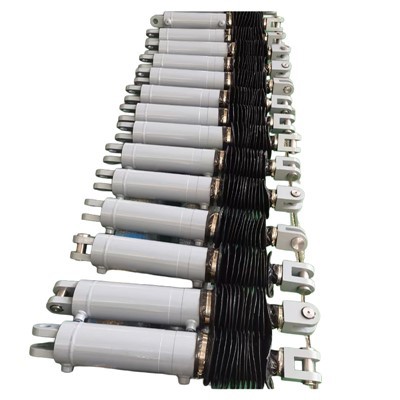
First, let’s break down what makes a tie rod cylinder different. Unlike welded hydraulic cylinders, which are sealed and built for high-pressure industrial use, tie rod cylinders have a series of threaded steel rods running through the ends of the cylinder barrel and head, tightening everything together like a sturdy bolted joint. That design isn’t just a random choice—it’s made to take the kind of punishment farm equipment faces every single day: dust, mud, temperature swings from freezing winter mornings to 90-degree summer afternoons, and constant, uneven stress from pulling and lifting heavy loads. At my company, we engineer every tie rod cylinder to handle those conditions specifically, not just as a one-size-fits-all component. For example, we coat the tie rods in a corrosion-resistant finish that holds up to fertilizer dust, pesticide residues, and the water that gets kicked up by wet fields. That small detail alone cuts down on maintenance time for farmers, who can’t afford to spend hours unclogging rusted parts when they should be in the field.
Now, let’s talk about where these cylinders show up on farms, because that’s where most of my customers start to see the real value. The biggest application, hands down, is in tractor implement attachment and adjustment. A lot of people don’t realize that a tractor’s three-point hitch— the arm that connects plows, seeders, harrows, and sprayers to the back of the tractor—relies on two or three tie rod cylinders to lift, lower, and angle implements with pinpoint precision. Before tie rod cylinders became standard in the 1970s, farmers used mechanical levers to adjust hitch height, which meant they’d often either drag an implement too deep into the soil (wasting fuel and wearing out plow blades) or leave it too high, missing half the field. Today, with a tie rod cylinder-powered three-point hitch, a farmer can adjust the height of a plow in real time as they drive over uneven terrain. No more stopping to reposition levers, no more uneven plowing, and no more wasted time mid-row. I remember a customer in Iowa, a corn farmer named Tom, telling me last year that switching to our tie rod cylinders cut his plowing time by 12% in a single season. That kind of efficiency isn’t just a number—it’s the difference between making a profit and breaking even when corn prices are tight.
Next up are sprayers, which are make-or-break for crop health. Agricultural sprayers—whether they’re mounted on tractors, self-propelled rigs for large fields, or even smaller pull-behind models—need to spray herbicides, pesticides, and fertilizers evenly across a field, even when the terrain is bumpy. Tie rod cylinders control the height and angle of the sprayer boom, which can stretch 100 feet or more across a field. If the boom is too low, it will hit ditches, fence lines, or tall weeds, bending the nozzles and wasting chemicals. If it’s too high, the spray drifts, missing target areas and risking over-spray that damages adjacent crops or contributes to runoff. Our tie rod cylinders are designed to adjust the boom’s height and angle smoothly, even at 15 miles per hour, which is the typical speed for sprayers during application. What’s more, these cylinders can be calibrated to work with the sprayer’s GPS system, so they automatically adjust height based on field maps that flag low spots or obstacles. Tom, the corn farmer I mentioned earlier, also uses our cylinders on his 120-foot sprayer boom. He told me that before he switched, he was using sprayer nozzles at 30% capacity because of drift, wasting hundreds of dollars on chemicals every year. Now, with precise height control, he uses 98% of his spray volume where it needs to go. That’s a return on investment that pays for the cylinders in about two growing seasons.
Another critical application is in combine harvesters, the machines that do the actual work of cutting and collecting crops like wheat, soybeans, and corn. Combines have dozens of moving parts, and many of them rely on tie rod cylinders to operate efficiently. One key part is the header, the cutting attachment at the front of the combine. The header needs to sit at exactly the right height above the ground to cut crops at the correct level—too low, and it will hit rocks or soil, dulling the blades and picking up debris that clogs the machine; too high, and it will leave grain on the ground, leading to major losses. Tie rod cylinders adjust the header’s height continuously as the combine moves, reacting to terrain changes in a fraction of a second. What’s more, modern combines use tie rod cylinders to adjust the width of the header, which is useful when moving between small fields and large fields, or when switching between crops (like narrow wheat rows and wide corn rows). I also supply cylinders for the combine’s cleaning system, which separates grain from chaff and debris. Tie rod cylinders adjust the angle of the cleaning fan and the sieves that do the separating, ensuring that only clean grain goes into the bin and nothing is wasted. A customer in Kansas who runs a large wheat operation told me last harvest that his old cylinders would often stick when he was adjusting the header mid-harvest, leading to as much as 5 bushels per acre lost. Since switching to our tie rod cylinders, that number is down to less than half a bushel per acre. For a 1,000-acre wheat farm, that’s 25,000 extra bushels of grain—enough to pay for a new set of cylinders and still make a profit.
Tie rod cylinders aren’t just for large, high-powered equipment, either—they play a big role in livestock farming, which is a huge part of the agricultural industry too. Livestock barns, feedlots, and dairy operations rely on hydraulic systems for everything from adjusting stall gates to moving feed, and tie rod cylinders are perfect for these applications because they’re easy to maintain and adjust. For example, in dairy barns, tie rod cylinders power the automatic scrapers that clean manure from the barn floor, which keeps the barn clean and reduces the risk of disease in cows. In feedlots, they adjust the height of feed bunks, so the right amount of feed is available at all times, reducing waste and ensuring each animal gets the nutrition it needs. Even smaller operations, like vegetable farms, use tie rod cylinders in equipment like tomato harvesters, which lift and shake plants to remove fruit, or in conveyor systems that move harvested produce to packing areas. One of my smaller customers, a vegetable farmer in Ohio who grows tomatoes and peppers, uses our tie rod cylinders in his manual harvester to adjust the picking head’s angle, so it doesn’t damage ripe fruit. He told me that before he used hydraulic cylinders, he was hand-adjusting the head every 10 minutes, which slowed him down and led to more bruised produce that had to be sold at a discount. Now, he can adjust the head once at the start of the row, and it stays in place all harvest, cutting his picking time in half and reducing produce waste by 20%.
So why do farmers keep coming back to tie rod cylinders, instead of other hydraulic options? Let’s compare them to another common type, welded cylinders. Welded cylinders are built for very high pressure, which makes them good for heavy construction work, but they’re not ideal for farm equipment because they’re not easy to repair. If a welded cylinder breaks or leaks, you usually have to replace the whole unit, which can cost hundreds or even thousands of dollars, and it often takes a long time to get a replacement. Tie rod cylinders, on the other hand, are designed to be disassembled and repaired on-site. If a seal breaks or a tie rod gets bent, you can replace just the broken part, not the whole cylinder, which saves money and gets the farmer back in the field faster. I’ve had customers tell me that when a tie rod cylinder on his plow broke during harvest, he was able to replace the seal and a tie rod in 45 minutes, instead of waiting three days for a new welded cylinder to arrive. That kind of uptime is priceless for farmers, who can’t afford to miss a single day of harvest.
Another benefit is adjustability. Tie rod cylinders allow for precise control of linear motion, which is essential for all the applications I mentioned earlier. Whether it’s adjusting the boom height on a sprayer or the header on a combine, being able to make small, gradual adjustments makes a huge difference in efficiency and crop yield. Unlike manual or mechanical systems, hydraulic tie rod cylinders let operators make those adjustments smoothly, without jolting or uneven movement that can damage equipment or crops. That precision is why so many equipment manufacturers now build their tractors, sprayers, and combines with tie rod cylinders as standard parts—they’ve seen the data on reduced downtime, lower maintenance costs, and higher yields.
Now, I know a lot of farmers are cautious about new parts, especially when it comes to things they rely on for every day of the growing season. I never try to pressure customers into buying something they don’t need, but I always emphasize that investing in quality tie rod cylinders saves money in the long run. A few extra dollars spent on a durable, well-engineered cylinder from my company might cost a little more upfront, but it means fewer breakdowns, less lost crop, and less time spent in the workshop instead of in the field.
If you’re a farmer, equipment operator, or anyone working in the agricultural industry who’s dealing with worn-out, unreliable hydraulic cylinders, I’d love to talk to you about how our tie rod cylinders can help. We work with farms of all sizes, from small family operations to large commercial agribusinesses, and we can custom-engineer cylinders to fit your specific equipment and needs. Whether you need cylinders for a three-point hitch, a sprayer boom, a combine header, or livestock equipment, we have the parts and the expertise to keep you running smoothly all season long.
When I started this business, I did it because I saw too many farmers losing money because of parts that weren’t built for real farm work. My team and I build every tie rod cylinder with the same attention to detail we’d use for our own farms—because that’s exactly what this industry is: a community that works hard, and relies on each other to get the job done. If you’re ready to upgrade your hydraulic systems or just have questions about what tie rod cylinders can do for your operation, reach out to our team to discuss your requirements and find the right solution for you.
Hydraulic System References:
- Agricultural Engineers Yearbook. Hydraulic Systems for Modern Farm Equipment. American Society of Agricultural and Biological Engineers, 2022.
- Midwest Ag Equipment Maintenance Report. Tie Rod Cylinder Durability and Performance in Field Conditions. Farm Journal Media, 2023.
- USDA Economic Research Service. Efficiency Gains in Agricultural Machinery: Hydraulic Component Impact on Crop Yield and Profits. U.S. Department of Agriculture, 2022.
- Livestock Facilities Hydraulics Guide. Tie Rod Cylinder Applications in Barn and Feedlot Equipment. National Agricultural Library, 2021.
Wuhu Zhongye Fluid Equipment Co., Ltd.
We are one of the most experienced tie rod cylinder manufacturers and suppliers in China, specialized in providing high quality customized products. Please feel free to wholesale bulk durable tie rod cylinder in stock here from our factory. Contact us for quotation.
Address: No. 2, Hexing Road, Sanshan District, Wuhu City, Anhui Province
E-mail: zhongyehydro20@163.com
WebSite: https://www.zhongyehydro.com/
