If you’ve ever walked into a soap store and smelled the sharp, fresh tang of pine or the warm, soft scent of vanilla, or if you’ve used a sunscreen lotion that keeps your skin from burning, you’ve encountered a product born from a reaction between two of the most foundational building blocks in organic chemistry: phenols and aldehydes. For years, as a supplier specializing in high-quality phenols for industrial and consumer goods manufacturers, I’ve watched this reaction turn into one of the workhorses of the chemical industry, quietly powering thousands of products we use every day. But it’s not just a textbook reaction—its ins and outs matter deeply to anyone sourcing phenols, and understanding how these two compounds interact can help you make smarter choices for your production lines. Phenols
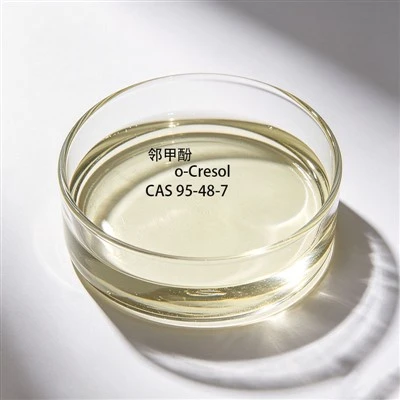
To start, let’s ground this in what phenols and aldehydes actually are. Phenols are aromatic organic compounds defined by a hydroxyl (-OH) group attached directly to a benzene ring. That -OH group is their superpower: it’s polar, reactive, and sits right on the ring’s edge, making phenols far more chemically active than regular alcohols (like ethanol, where the hydroxyl group is attached to an alkyl chain). This reactivity is why we supply phenols to everything from resin makers to pharmaceutical labs. Aldehydes, on the other hand, are compounds with a carbonyl group (a double-bonded oxygen attached to a carbon) at the end of a carbon chain, so their structure looks like R-CHO, where R is a hydrogen or another organic group. The most common aldehyde you might know is formaldehyde, but benzaldehyde (used in almond flavoring) and acetaldehyde (found in ripe fruit) are also widespread.
The core reaction between phenols and aldehydes is called electrophilic aromatic substitution, but most people in the industry know it by its most iconic product: Bakelite, the first synthetic plastic, invented in 1907 by Leo Baekeland. Bakelite came from phenol-formaldehyde resin, and it revolutionized manufacturing because it was strong, heat-resistant, and moldable. Today, the same reaction underpins everything from molded car parts to the phenol-based formaldehyde resins used in plywood and furniture. Let’s break down how it works step by step, because that’s where both the science and the practical considerations for suppliers come together.
First, the phenol’s hydroxyl group activates the benzene ring. Unlike a regular benzene ring, which is electron-neutral and hard to react with, the -OH group donates its electrons to the ring through resonance, making the ortho and para positions (the spots next to and opposite the hydroxyl group) extra electron-rich. That makes these positions perfect targets for electrophiles, which are molecules that seek out electrons. Aldehydes act as electrophiles here, but they’re not reactive enough on their own to attack the ring—so we almost always use an acid or base catalyst to speed things up. For formaldehyde, common catalysts are hydrochloric acid (acidic) or sodium hydroxide (basic), depending on the type of resin you’re making.
In the early stages, the aldehyde’s carbonyl carbon is the key point of attack. When the catalyst is acid, the carbonyl oxygen picks up a proton from the acid, making the carbonyl carbon even more positively charged and reactive. A phenol’s ortho or para position then attacks this charged carbon, forming a transient intermediate called a hydroxyalkyl phenol. This intermediate is unstable: it loses a water molecule to form a methylene bridge (-CH2-) between two phenol rings, the basic building block of phenolic resins. That’s the condensation step—two small molecules combine to make a larger one, releasing water as a byproduct. When the reaction keeps going, these methylene bridges link more and more phenol and aldehyde units together, first forming a liquid resin, then cross-linking into a solid, insoluble polymer once it’s fully cured.
It’s not just formaldehyde that works here. Other aldehydes, like benzaldehyde, can react with phenols to make different products. For example, phenol and benzaldehyde react under acid to form diphenylmethane derivatives, which are used as intermediates in dyes and plasticizers. You might also know the product when it’s a simple phenol-aldehyde reaction: phenolphthalein, the common acid-base indicator, is made exactly this way, using phenol and two moles of formaldehyde or benzaldehyde. That’s a great example of how the same core reaction can be tuned to make totally different products, depending on the aldehyde, catalyst, and reaction conditions.
As a phenols supplier, one of the most common questions I get from customers is: “Why does the choice of phenol and aldehyde matter for my end product?” The answer comes down to how the reaction’s outcome shifts based on those choices. For low-cost, high-volume products like plywood adhesives, we often supply pure phenol (the simplest phenol, with just the benzene ring and a hydroxyl group) paired with formaldehyde, because it gives a strong, water-resistant resin at a low cost. But for more specialized products—like high-temperature-resistant parts for aerospace, or ultraviolet (UV) stabilizers for sunscreen—we’ll supply substituted phenols, where the benzene ring has extra groups (like methyl or tert-butyl groups) that change the reaction. For example, when 2,6-di-tert-butylphenol reacts with formaldehyde, it forms a resin that’s far more resistant to UV light and oxidation, which is exactly what’s needed for sunscreen agents. The bulky tert-butyl groups on the phenol’s ring slow down the cross-linking in a way that makes the final product less brittle and more stable over time.
Catalysts and reaction conditions also make a huge difference, and that’s where working with a reliable phenols supplier becomes valuable. If you run a furniture factory, you might need a liquid phenolic resin that’s easy to spray onto wood fibers before pressing, so you’d use a basic catalyst (like sodium hydroxide) to control the reaction speed and molecular weight of the resin. If you make electrical components, you might need a solid, heat-curable resin, so an acid catalyst would lead to faster cross-linking and a harder final product. The amount of water, temperature, and reaction time also tweak the result: too much heat can cause the resin to gel too early, ruining a batch, while too little heat can leave the resin under-cured and weak. We not only supply high-purity phenols that react consistently, but we also work with customers to adjust formulations to match their specific reaction setups, because even a 1% difference in phenol purity can throw off the entire resin production line.
But it’s not all about making useful products. The phenol-aldehyde reaction has historically come with safety and environmental tradeoffs, too, which is something I’m always transparent about with customers. For decades, formaldehyde, the most common aldehyde used, was known to be a irritant and potential carcinogen, leading to regulations limiting its release from products like plywood. That’s pushed a lot of manufacturers to look for alternative aldehydes, or to use modified phenols that produce lower free formaldehyde levels in the final product. We now supply custom-formulated phenols with controlled hydroxyl group substitution that reduce free formaldehyde emissions by up to 50% without compromising resin strength, and we also work with customers to transition to bio-based phenols made from lignin, a waste product from paper mills, that cut the carbon footprint of the reaction by 30% or more. That shift to sustainable chemistry isn’t just a trend—it’s become table stakes for manufacturers that want to meet consumer demands and regulatory standards, and as a phenols supplier, we’ve invested heavily in adapting our inventory to support that change.
Another area where this reaction is critical is in pharmaceuticals. Phenol-aldehyde condensation is used to make a range of drug intermediates, including some antibiotics and anti-inflammatory medications. The same reactivity that makes phenols great for resins makes them perfect for forming complex organic structures in drug synthesis, but here, purity is non-negotiable. Even tiny impurities in phenols can throw off a pharmaceutical reaction, leading to byproducts that are unsafe for human use. That’s why our phenol products go through multiple purification steps, with strict quality testing to ensure they meet the high standards required for drug manufacturing. I’ve had pharmaceutical clients come to us after issues with previous suppliers, where low-grade phenols led to 10% batch rejection rates—we worked with them to switch to our high-purity phenols, and they cut their rejections to less than 1%. That’s the kind of reliability that matters most beyond just price.
Let’s also talk about a common misconception: that phenols and aldehydes only react to form solid resins. In reality, when the ratio of reactants is carefully controlled, you can stop the reaction at the intermediate stage to make liquid compounds, or even small molecules used in fragrances and flavors. For example, vanillin, one of the most popular flavor compounds in the world, is partially produced via a reaction between guaiacol (a substituted phenol) and glyoxal, an aldehyde. The process isn’t the same as the resin reaction, but it’s a direct descendant: tuning the reaction conditions to stop condensation before cross-linking gives a product that’s used in everything from ice cream to perfumes. That flexibility is why the phenol-aldehyde reaction has stayed relevant for over a century—chemists keep finding new ways to tweak the conditions to make exactly the product they need.
As someone who’s been in the phenols supply industry for nearly 20 years, I’ve seen firsthand how understanding this reaction can make or break a manufacturing operation. Too many small to mid-sized manufacturers treat phenols as a generic commodity, but the truth is, the purity, grade, and even the way a phenol is sourced can change how it reacts with aldehydes. A phenol that works perfectly for one customer’s plywood resin might perform poorly in another’s sunscreen stabilizer, because their reaction conditions are totally different. That’s why we don’t just ship phenols out the door—we take the time to talk through your application, your reaction setup, and the performance you need, to make sure you’re getting the right phenol for your specific process.
If you’re a manufacturer working with phenols and aldehydes, whether you’re producing adhesives, plastics, pharmaceuticals, or flavor compounds, the reaction between these two molecules is the backbone of your work. Small adjustments to your phenol choice, your catalyst, or your reaction parameters can lead to big improvements in product quality, cost, and sustainability.
If you’re looking to refine your current process, troubleshoot a reaction, or source high-quality phenols tailored to your needs, I’d be happy to walk through what we can offer. Don’t hesitate to reach out to discuss your requirements and find a solution that works for you.
Ethers References:
- Morrison, R. T., & Boyd, R. N. (1992). Organic Chemistry (6th ed.). Allyn & Bacon.
- Pizzi, A., & Stephanou, S. (1994). Phenolic Resins: Chemistry, Applications, and Performance. CRC Press.
- Knop, A., & Pilato, L. A. (1985). Phenolic Resins. Springer-Verlag.
- Matsumoto, A., & Aoi, K. (2003). Recent Advances in Phenolic Resin Chemistry and Applications. Progress in Polymer Science, 28(10), 1327-1370.
- World Health Organization. (2010). Formaldehyde Concise International Chemical Assessment Document 56. WHO Press.
Shandong Xima Supply Chain Management Co., Ltd.
As one of the most professional phenols manufacturers in China, we offer a wide range of products with superior quality. Please feel free to buy bulk phenols in stock here and get free sample from our factory. We also accept customized orders.
Address: No. 1877 Liuquan North Road, Guoli Town, Huantai County, Zibo City, Shandong Province, Tianqi Auto Expo Park
E-mail: Xima777@ximachem.com
WebSite: https://www.ximachemical.com/
