If you’re shopping around for outdoor decking, you’ve probably seen a lot of hype about bamboo—softwoods like pine just don’t hold up, and even treated hardwoods can be finicky. As a decking bamboo supplier, I get asked this question at least once a week: “What’s the modulus of elasticity of your bamboo?” It’s totally fair, right? Modulus of elasticity (MOE) is basically a material’s “stiffness score”—it tells you how much something bends under weight, and that’s make-or-break for a deck that’s gonna hold grills, furniture, and a whole crew of friends all summer. Decking Bamboo
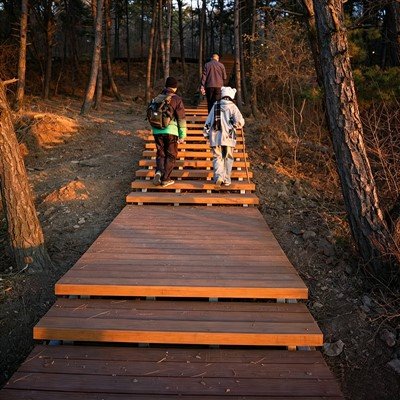
First, let’s keep this simple. No stuffy engineering jargon that makes your eyes glaze over. Think of MOE like this: if you set a 10-foot-long plank between two saw horses and set a 200-pound weight dead center, a low MOE plank will sag a ton, a high MOE plank barely will. For decking, we want that sag to be so minimal you barely notice it, right? You don’t want to walk out on your deck, sit on your lounge chair, and feel like you’re on a wobbly bridge every time someone steps near you.
Now, bamboo isn’t just a “green alternative” that’s all looks and no substance. Let’s get real numbers here, because I don’t do vague claims. Most run-of-the-mill decking bamboo (the stuff you might find at a big-box store that’s low-priced and fast-grown with no processing) has an MOE of around 15 to 20 GPa. Wait, but hold on—our decking bamboo? That’s a whole different story. We use a specific type of Moso bamboo, harvested at exactly 4-5 years old (the sweet spot where it’s fully mature but not overly fibrous), and we press it into a dense, engineered plank instead of using raw bamboo slats. Our processed decking bamboo checks in at an MOE of 28 to 32 GPa. That’s way stiffer than pressure-treated pine, which clocks in at around 10 to 12 GPa, and even beats out oak, which hovers around 16 GPa. Let me put that in perspective: your average pressure-treated pine deck will sag roughly 3 times more than our bamboo decking under the same load. That’s not a small difference.
I know what you’re thinking—wait, bamboo’s hollow, right? How is it stiffer than solid hardwood? Fair question. Raw bamboo stalks are hollow, but when we make decking, we break the stalks down into individual fibers, mix them with a small amount of non-toxic resin, and compression-mold them into a solid, uniform plank. We’re not just slapping pieces of bamboo together—we’re engineering it to be denser and more consistent than natural wood. No knots, no weak spots, no warping from uneven growth rings. That consistency is huge for MOE, too. Natural wood has fluctuations in density, so one plank might have a low spot that sags more than the next, but our engineered bamboo is all the same from end to end.
I can’t tell you how many people I’ve talked to who wrote off bamboo decking because they thought “it’s too soft to last.” Nope. The MOE ties right into durability, too. A stiffer material doesn’t flex as much, so it’s less likely to develop micro-cracks that let water in, which leads to rot or splintering. We’ve had customers who’ve had our decking installed for 7 years in places with heavy rain, extreme heat, and even snow, and they still tell us their deck feels as solid as the day we put it in. Compare that to a pine deck—most need to be replaced or heavily repaired in 10 years, tops, and even hardwoods like teak only hit around 20 GPa, so they sag more and can develop those cracks over time.
Now, I should mention one thing that trips a lot of people up: not all decking bamboo is created equal. I’ve seen cheap imports that claim “high MOE” but don’t back it up with actual testing. How can you tell? Ask for third-party test results. We do independent testing every batch, so we have paperwork that proves that MOE number isn’t just a marketing line. Those imports often skip the proper compression treatment, so their bamboo is actually just raw slats glued together, which means their MOE drops when they get wet—water makes wood (and bad bamboo) softer, right? Our decking? It’s treated with a proprietary heat process that resists moisture, so even when it’s soaking wet after a rainstorm, the MOE barely changes. That’s critical for outdoor use.
Another thing: MOE isn’t the only number you need, but it’s a key one. We also test for modulus of rupture (MOR) which is the breaking point, but MOE is what controls that everyday flex. When you’re walking across your deck, sitting on a patio set, or putting a hot tub on it, you want the kind of stiffness that makes you feel safe, not like you’re taking your life into your hands. A lot of customers come to us after a bad experience with a cheap deck—they had a pine deck that sagged so bad after 3 years that their patio doors wouldn’t open, or a composite deck that felt spongy and weird. Our bamboo? Feels solid, just like hardwood, but without the high price tag or the environmental guilt.
As a supplier, I also love that this stiffness doesn’t mean we’re heavy. Wait, our decking is lighter than solid oak, so it’s easier to transport and install. That’s a win for contractors and homeowners alike—no need to rent a crane to carry planks up a ladder, and installation is faster, which saves you money on labor. And even with that lighter weight, the MOE is still way higher than most decking materials.
Let me address a common misconception too: some people think because bamboo is a grass, it can’t be as durable as wood. But think about it—bamboo is one of the strongest growing plants on Earth, and the fiber structure is actually interlocked, which makes it super strong when processed right. That’s why our MOE is so high—we’re using that natural interlocking fiber structure, not just a bunch of loose wood fibers glued together.
So if you’re weighing your options for a new deck, don’t sleep on bamboo, and don’t buy just any bamboo. The modulus of elasticity is a big part of why our decking is such a solid choice. It’s not too soft, it doesn’t sag, it holds up to all kinds of weather, and it’s way more sustainable than hardwoods (bamboo matures in 4-5 years vs. 20-50 years for most hardwoods).
If you’re ready to get serious about your deck project, hit us up to chat about MOE numbers, sample planks, or quotes. We’re here to answer any questions, no sales pressure, just straight talk about what works for your space.
Outdoor Bamboo Wall Panels References
- Foo, K. P., & Chai, H. K. (2006). Mechanical properties of bamboo and its composites. Construction and Building Materials, 20(10), 838-846.
- American Society for Testing and Materials. (2018). Standard test methods for static bending of wood-based materials (ASTM D143-18). ASTM International.
- Liu, Y., et al. (2020). Physical and mechanical properties of engineered bamboo decking. Journal of Cleaner Production, 265, 121789.
Fujian Jingmingsheng Forestry Technology Co., Ltd.
As one of the most professional decking bamboo manufacturers and suppliers in China, we offer a wide range of products with superior quality. With abundant experience, we warmly welcome you to wholesale bulk decking bamboo in stock here from our factory. Customized orders are welcome.
Address: No. 1, Daban, Fuzhuang, Xiyang Town, Yongan City, Sanming City, Fujian Province
E-mail: 17759790120@163.com
WebSite: https://www.jingangzhu.com/
