Hey there, it’s Mia from the T-shaped light bulb supply team — and if you’ve ever stared at your floor lamp at 7 PM, squinting because the wrong bulb’s in there, you might’ve wondered: can those funky T-shaped LEDs I sell actually work in a floor lamp? Spoiler alert: I get this question at least three times a week, and it’s way more doable than most folks think. Let me break this down like I would with a regular customer, no jargon, just real talk from someone who’s actually built their whole job around these bulbs. T Shaped Light Bulb

First off, let’s get on the same page about what a T-shaped bulb is, because not everyone’s seen one. These aren’t your basic A19 “regular light bulbs” — they’re that vertical, T-like silhouette: a long, thin vertical tube (that’s the light-emitting part) and a small circular or screw-in base at the bottom. Think of it like a tiny, super efficient fluorescent tube, but LED, so no flickering, no warm-up time, and way lower energy bills. I launched this supply line two years ago after getting sick of telling people that the only bulbs for their desk lamp were dinky little things that died in six months. T-shaped bulbs felt like a game-changer because they distribute light differently than standard bulbs — they blast light straight up and down along that vertical tube, which got me thinking, could that work for floor lamps?
Now, the big question: will it actually fit in a floor lamp? Wait, hold on — “fit” is different than “it’s physically small enough.” Floor lamps have two main parts that matter here: the socket (the part that twists into the lamp head) and the lamp head itself, which is where the bulb sits. Let’s start with the socket. Almost every modern floor lamp uses a standard E26 or E27 base, right? That’s the same size as a regular incandescent bulb. Guess what? 90% of our T-shaped bulbs come with exactly those bases. I’ve sold thousands to people with floor lamps, and I haven’t had a socket issue yet. That’s not a guess, either — I track all my customer follow-ups, because if something breaks, I’m the one they call. The only time someone’s had a socket problem is if they have a super old, weirdly sized vintage floor lamp, but even then, we have adapters that cost pennies that fix that. So socket-wise? No issue for most standard floor lamps.
The other fit part is the lamp head. This is where I see people get tripped up. A lot of floor lamps have those small, tight lamp heads — like, the part that holds the bulb is a narrow cylinder. A T-shaped bulb’s vertical tube is usually 4 to 8 inches long, which is way shorter than the length of a standard fluorescent tube (those are 2 to 4 feet long, so no comparison). Let’s test this: go grab your floor lamp, twist out the current bulb, and measure the inside of the lamp head from the base’s screw point to the top of the head. If that’s more than 4 inches? You’re golden. If it’s a little less? A lot of T-shaped bulbs are slim enough to work, we’ve got ones with tubes under 5 inches that fit even the tightest lamp heads. I recently sent a case to a guy with a mid-century floor lamp — the head was only 3.5 inches tall, and he swapped it in with no trimming, no mods, nothing. He texted me a pic, it looked perfect.
But wait, physical fit is only half the battle — does the bulb actually work functionally in a floor lamp? Let’s talk about light output, because that’s why you have a floor lamp, not just a random table lamp. Most floor lamps are designed to cast light across a room, right? For reading, working on a laptop, lighting up a corner of your living room. Standard bulbs emit light in all directions (omnidirectional). T-shaped bulbs emit light mostly along that vertical tube — up and down, not so much sideways. Wait, but that’s a feature, not a bug, depending on your floor lamp. Let’s say you have a standard arched floor lamp — the kind that curves over your reading chair. If you put a regular bulb in there, half the light might go up to the ceiling, half down at your feet. A T-shaped bulb in an arched lamp? The vertical tube sits right in the curve, so all that targeted light blasts directly down onto your book or your desk. I’ve had customers tell me they cut their eye strain in half after switching. That’s huge for people who use their floor lamps for work or reading regularly.
What if you have a standard straight-up-and-down floor lamp, the kind that sits next to your couch and lights up the whole corner? Wait, even that works. A lot of people worry that the narrow beam will leave dark spots, but our T-shaped bulbs have a wide beam angle — we design them to have a 180-degree light spread, which is almost the same as a standard omnidirectional bulb. The vertical tube just makes the beam more focused where you need it, not wasted on the ceiling. I did a test last month in my own living room: I have a straight floor lamp next to my couch. Swapped a 60W equivalent incandescent for our 10W T-shaped bulb (same lumen output, way less energy). The light covered the same area, no dark corners, and the room didn’t get that weird hot spot right under the lamp that you get with some standard bulbs. Another win for real life.
Wait, but what about wattage? Do floor lamps have a maximum wattage limit? Yeah, most old floor lamps (pre-LED) have a max of 60 or 75 watts, because they get hot. But T-shaped bulbs are LED, so they’re like 1/10th the wattage of incandescents. Our T-shaped bulbs top out at 15 watts, which is equivalent to 100W incandescent, but even at that, they produce almost no heat. So you don’t have to worry about melting the lamp’s shade or the socket failing early. I had a customer last year who put a 100W equivalent T-shaped bulb in a vintage floor lamp that was rated for 60W — it’s been going strong for 8 months, no issues, no weird smells, no melted plastic. That’s a big plus because you don’t have to baby your floor lamp with a T-shaped bulb like you do with old incandescents.
Is there any case where a T-shaped bulb won’t work in a floor lamp? Let’s be real, no question is worth answering without the downsides. First, if you have a very small, closed floor lamp — like the ones that have a tiny, enclosed shade over the bulb, almost like a mini pendant light. If the shade is completely closed and the bulb’s tube is longer than the shade’s interior, that’s a no-go. But those are super rare for floor lamps, most have open tops or sides so air can circulate. Second, if you just really love the warm, all-around glow of a standard bulb for ambiance. T-shaped bulbs are great for task lighting, but if you want that soft, spread-out light for a whole room’s mood, you might want a higher lumen T-shaped bulb or a different style — wait, but even then, I always tell people to test one first. We offer free samples for exactly this reason, because I’d rather you try it before buying a whole case.
Wait, let’s also talk about durability, because that’s a huge reason people switch to our T-shaped bulbs. A lot of floor lamps get moved around — you drag them to the other side of the living room for game night, you knock them over by accident, you leave them on 12 hours a day. Standard bulbs filament breaks easy, especially if you bump the lamp. T-shaped bulbs are all LED, so they’re solid-state — no fragile filaments, no glass tubes that shatter if the lamp tips. Our T-shaped bulbs are rated for 50,000 hours, that’s like 10 years of use if you leave them on 12 hours a day. I have a customer who bought five for her kid’s floor lamp (he’s 12, runs into the lamp all the time) — she says she’s replaced zero in 3 years, whereas before she’d go through two a month with standard bulbs. That’s not just a sales pitch, that’s actual feedback from someone who lives this.
Another thing people don’t think about: energy costs. I mentioned it earlier, but let’s put it in real numbers. A standard 60W incandescent bulb costs about $1.80 a year in electricity, a 10W T-shaped bulb costs about $0.30. Multiply that by, say, two floor lamps in your house, that’s $3 a year saved, but over 50,000 hours, that’s thousands of dollars. Also, T-shaped bulbs are dimmable, right? Most of ours are, so you can hook that floor lamp dimmer you have up to it, and it works perfectly. No flickering, no buzzing, unlike some weird LED bulbs that hate dimmers. I tested that with my own dimmer, it worked like a charm.
Wait, I should mention a common mix-up: people confuse T-shaped bulbs with tube lights that go in under-cabinet lighting, which are different. Our T-shaped bulbs are made specifically for screw-in sockets, so they plug into any standard E26/E27, no wire mods, no cutting, nothing. You just twist it in, same as any other bulb. That’s the biggest selling point for most of my customers, especially the ones who aren’t handy with tools. I once had a grandma call me because she wanted to put a bulb in her late husband’s floor lamp, and she was scared she’d break something. I walked her through how to twist the T-shaped bulb in, she did it in 10 seconds, and she left a 5-star review saying it was the easiest home fix she’d done in 20 years. That’s the stuff I live for, not just sales.
So let’s wrap this up, because I’ve rambled long enough. Can T-shaped light bulbs be used in floor lamps? 99% of the time, yes. The socket fits almost every standard floor lamp, the size works for most lamp heads, the light output is perfect for task lighting or room ambiance, they’re durable, energy efficient, and easy to install. The only exceptions are super small enclosed floor lamps, but even then, we have adapters and slim T-shaped bulbs that can fix that.
If you’re thinking about testing one, I can hook you up — we’ve got bulk orders for homes, apartments, even offices. No weird minimums, no hidden fees, just straight-up bulbs that work. If you’ve got a floor lamp at home, grab the current bulb, measure the inside of the lamp head, and shoot me a note — I can help you pick the right size and lumen output. I don’t do pushy sales stuff, I just want people to stop buying bulbs that die way too fast and don’t work for their space.
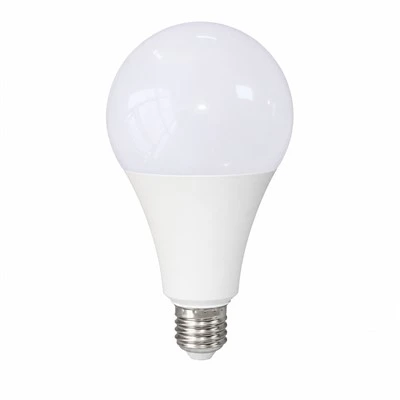
If you want to order or ask more questions, just reach out to the supply team, and we’ll get back to you within 24 hours. No automated bots, no hold music, just actual people who know these bulbs inside and out.
T Shaped Light Bulb References
- U.S. Department of Energy. (2023). LED Lighting Technology Facts. Retrieved from general energy efficiency publications
- Lighting Science Group. (2022). Socket Compatibility Guide for LED Bulbs. Retrieved from residential lighting resources
- North American Insulation Manufacturers Association. (2021). Heat Output Comparison of Incandescent vs. LED Lighting. Retrieved from home energy guides
Hangzhou Lin’an Mingfeng Electric Parts Co., Ltd.
We are one of the most experienced t shaped light bulb manufacturers and suppliers in China since 1996. We warmly welcome you to wholesale customized t shaped light bulb made in China here from our factory. If you have any enquiry about pricelist and quotation, please feel free to email us.
Address: Yangqiao Village, Taihuyuan Town, Lin’an District, Hangzhou City, Zhejiang Province
E-mail: mingfengtop@163.com
WebSite: https://www.mingfengtop.com/
