Yo! I’m a supplier of fan impellers, and today I wanna chat about something super important in our industry: What is the optimal blade angle for a fan impeller? This isn’t just some random tech talk; it’s crucial for anyone looking to get the best performance from their fans, whether it’s for industrial use, HVAC systems, or just a good old household fan. Fan Impeller
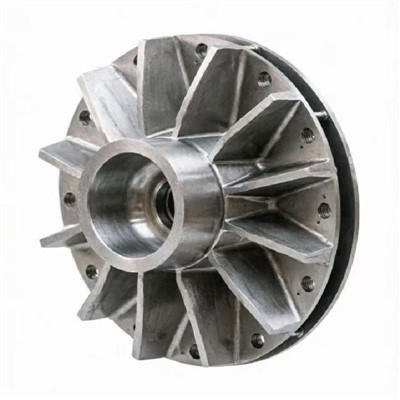
Let’s start with the basics. The blade angle of a fan impeller is the angle at which the blades are set relative to the impeller’s rotation plane. This angle plays a huge role in determining how the fan moves air. Different blade angles can lead to different airflows, pressures, and efficiencies.
One of the most common blade angles you’ll come across is the forward – curved blade angle. Fans with forward – curved blades have blades that curve in the direction of the impeller’s rotation. These types of fans are known for producing high airflow rates at relatively low pressures. They’re often used in applications where you need to move a large volume of air quickly, like in some air – handling units. The forward – curved design allows the blades to scoop up and push the air along more aggressively. However, they do come with a downside. They tend to be less efficient than other blade designs, especially at higher pressures. This means they might consume more energy to achieve the same level of performance as other fan types.
On the other hand, we have backward – curved blade angles. Backward – curved blades curve against the direction of the impeller’s rotation. These blades are a favorite in many industrial settings because they’re highly efficient, especially at higher pressures. They can generate a lot of pressure with relatively little energy input. This efficiency translates to lower operating costs over time, which is a big deal for businesses. But the trade – off is that they usually have a lower airflow rate compared to forward – curved fans at the same rotational speed. So, if you need a high – pressure, energy – efficient solution, backward – curved blades might be the way to go.
Then there’s the radial blade angle. Radial blades are straight and extend radially from the impeller’s center. They’re known for their simplicity and durability. Radial fan impellers can handle a wide range of pressures and airflows, making them versatile. They’re often used in harsh environments, like in dust – laden industrial settings, because they can resist damage better than other blade designs. However, they’re not as efficient as backward – curved blades, and their performance can be affected by changes in the system’s resistance.
So, how do you determine the optimal blade angle for your specific application? Well, it all boils down to your requirements. If you’re working on a project that requires a large volume of air movement at a low pressure, like a simple ventilation system in a small warehouse, a forward – curved blade impeller might be your best bet. You can get a lot of air flowing through the space with a relatively small motor.
But if you’re dealing with a high – pressure system, like in a large HVAC ductwork where the air has to travel through long pipes and around bends, a backward – curved blade impeller would be more suitable. It can create the necessary pressure to push the air through the system without using too much energy.
In some cases, you might even need to consider a mixed – flow design. Mixed – flow fan impellers combine elements of both axial and radial flow, and they can have variable blade angles that are optimized for specific performance characteristics. These are often used in applications where you need a balance between high airflow and high pressure, like in some cooling towers.
Another factor to consider is the size of the fan impeller. Larger impellers can generally handle higher airflow rates and pressures, but the optimal blade angle might be different compared to smaller impellers. For larger impellers, a more gradual blade angle might be more effective in moving the air smoothly, while smaller impellers might benefit from a steeper blade angle to generate the necessary force.
The speed of the impeller also matters. At higher rotational speeds, the optimal blade angle might change. For example, a blade angle that works well at a low speed might cause excessive noise or inefficiency at a high speed. You need to find the right balance between the blade angle and the rotational speed to get the best performance.
As a fan impeller supplier, I’ve seen firsthand how choosing the right blade angle can make or break a project. I’ve worked with customers who initially went with the wrong blade design and ended up having to replace their fans because they weren’t getting the performance they needed. That’s why it’s so important to do your research and consult with an expert if you’re not sure.
If you’re in the market for fan impellers, I’d love to help you find the perfect blade angle for your application. Whether you’re a contractor working on a new building, a facility manager looking to upgrade your ventilation system, or a DIY enthusiast building your own fan, I can provide you with high – quality fan impellers that are tailored to your specific needs. Just reach out, and we can have a chat about your project. We can go over the details, look at the requirements, and figure out the best blade angle and impeller design for you.
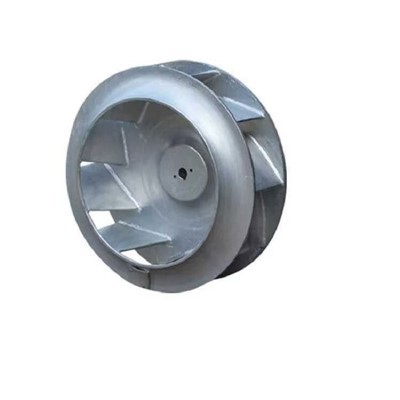
In conclusion, there’s no one – size – fits – all answer to the question of the optimal blade angle for a fan impeller. It depends on a variety of factors, including the application, the required airflow and pressure, the size of the impeller, and the rotational speed. But with the right knowledge and a little bit of guidance, you can make an informed decision and get a fan impeller that performs at its best. So, don’t hesitate to get in touch if you need help. Let’s work together to find the perfect solution for your fan needs.
Stainless Steel Fittings References
- "Fan Engineering: A Practical Treatise for the Design, Application, and Testing of Fans and Blowers" – Various editions
- Industry whitepapers on fan impeller design and performance from leading HVAC and industrial equipment manufacturers.
Shandong Shunye Stainless Steel Co., Ltd.
Shandong Shunye Stainless Steel Co., Ltd. is one of the most professional fan impeller manufacturers and suppliers in China, also supports customized service. Welcome to buy bulk cheap fan impeller made in China here and get quotation from our factory. For price consultation, contact us.
Address: Shandong Province, Binzhou City, Wudi County, Liubao Town, Zhangdong Road, Duliucun Village
E-mail: sales@wdshunye.com
WebSite: https://www.shunyecasting.com/
