If you’ve ever stared at a printed water bottle or a custom wine flask and thought, “How did they get the logo so straight—no lopsided edges, no half-missing text?” you’re not alone. As a bottle printing machine supplier, I get this question all the time from small-scale brand owners and large beverage companies alike. It’s easy to assume a machine just “knows” where to print, but alignment is the unsung superpower that turns a random blank bottle into a professional product—especially since bottles come in every shape, size, and material (glass, plastic, aluminum, even oddball things like silicone for sports bottles). Let me break down how our machines do it, no stuffy engineering jargon, just the real, behind-the-scenes stuff that keeps your products looking sharp. Bottle Printing Machine
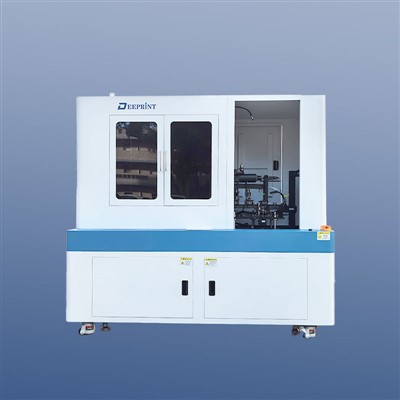
First, let’s start with why alignment is actually make-or-break here. If you’re a craft soda brand, a lopsided logo makes your bottle look cheap—like you printed it at home on a desktop printer instead of a factory. For big brands, even a 1mm misalignment can throw off a full packaging line, cause jam-ups, and waste thousands of bottles. Our customers often come to us because they struggled with old machines that would misalign every other bottle, costing them time and money. So we built our alignment systems to be tough, not just fancy.
The first step? Bottle infeed and indexing—this is where the bottle stops being a loose piece of plastic and gets locked into a consistent position. When bottles come down the conveyor belt, they’re all jumbled up, right? So first, we have a simple “orienting unit” that sorts them by neck or base size—no way a bottle is going through the printer if its neck is too small or too big. Then comes the indexing table. This isn’t just a rotating wheel; it’s a set of segmented clamps that grab the bottle’s neck or base (depending on its material—we use soft silicone clamps for glass so they don’t chip, rubber for plastic to grip without marring). Here’s the key: every index slot on the table is calibrated to the exact same diameter. So even if a bottle is slightly (1 or 2mm) off-spec, the clamp pulls it to a standard spot before it moves to the printing station. No more guessing about where the bottle sits.
Next up, vision alignment systems—this is the tech that most people notice when they talk about precision. Old bottle printers used mechanical guides, like a pin that would slot into a bottle’s neck ring, but those only work for bottles that have a consistent ring. If you’re printing on a smooth aluminum can that has no ring, or a uniquely shaped glass bottle, mechanical guides fail. That’s why we use machine vision cameras on every one of our mid-to-high-tier machines. Here’s how it works: right before the print head moves in, two or three tiny, high-res cameras snap a quick photo of the bottle’s key reference points. Those points could be a slight indent on the base, a scratch (we even use non-scratchable reference marks if you can’t alter the bottle), or the edge of a label you’re printing around. The camera feeds that photo to a little computer controller that’s already loaded with your exact design files. It compares the two in less than a second: “Okay, the logo needs to shift 0.8mm to the right, and rotate 0.3 degrees clockwise” — then it sends a tiny signal to the index table to adjust the bottle’s position before printing starts.
Wait, but what about curved surfaces? Most printers work on flat materials, but bottles are round, so that’s a whole other layer. Our print heads are actually “servo-driven,” meaning they move in perfect sync with the bottle’s rotation. It’s not like the old days where the print head fires in a single line as the bottle spins—we map the curved surface digitally, so each dot of ink or toner lands exactly where it’s supposed to, even if the curve shifts a little. For example, if you’re printing a logo that wraps 360 degrees around a 500ml water bottle, the machine doesn’t just spin the bottle and print straight lines; it calculates the circumference as it goes, adjusting the print head’s position in real time. That’s why the logo doesn’t look stretched on one side or squashed on the other.
Then there’s a check we built in to catch any last-minute slips. Even with all the indexing and vision, a bottle might get a tiny dent mid-infeed, or a clamp might slip a little. So after the print head fires, we have a second quality check camera that snaps a photo of the freshly printed design. If it’s even 0.5mm off, the machine automatically rejects that bottle—no need for a human to stop the line and inspect every one. Our customers love this because it cuts down on waste by like 80% compared to machines without this step. I remember one craft beer brand that switched to our machine and went from throwing out 120 bottles a day to 20—saving them thousands a month, just from that alignment check.
But here’s the thing: alignment isn’t a one-size-fits-all. We design our machines to adjust for different bottle types and printing methods. For example, if you’re using screen printing (great for bold, durable designs on glass bottles), the alignment is a bit different than digital printing (better for detailed, full-color designs on plastic). With screen printing, the stencil has to line up perfectly with the screen’s mesh, so our alignment system syncs the index table and screen’s position more tightly. With digital, the vision camera does the heavy lifting, since digital can adjust designs faster than screen stencils can be swapped. We even have a quick-change alignment mode for small batch runs—like if a customer is switching between a 250ml soda bottle and a 750ml wine bottle every hour, they don’t have to re-calibrate the whole machine for 20 minutes; it takes 90 seconds to swap out the reference settings and clamps.
I’ve heard a lot of customers say, “Why can’t I just print manually? It’s cheaper.” But try aligning 1,000 bottles by hand—you’ll have a headache, waste half the stock, and miss your production deadline. Our machines don’t just do alignment faster; they do it consistently, every single time. Even if a line is running 50 bottles a minute, the alignment doesn’t slip. That’s the difference between a good product and a great one.
Another common question: “What if my bottles are odd shapes? Like a hexagonal or a square bottle?” We get that all the time, especially from brands making specialty products. The vision system is totally flexible here—we just load a new reference point (like the edge of a hexagonal side) and the machine adjusts. No need to buy a whole new machine for a weird bottle shape. That’s the value we focus on, not just selling a machine, but making it work for whatever your product is.
Let me give you a real example. A few months back, we worked with a small cold brew coffee brand that was using square glass bottles. They’d been using a cheap printer that would misalign the logo on every other bottle, and they were losing big retail orders because of it. They switched to our machine, and within a week, their waste went from 15% to less than 2%. The alignment system was set to use the square’s top corner as a reference point, so it lined the logo up exactly with each bottle’s top edge—no more lopsided logos. They even told me that a local grocery chain picked up their order because the bottles looked “professional, not homemade.”
Now, I know some of you are thinking about cost. Alignment tech sounds expensive, right? But when you calculate the savings from less waste, faster production, and less rework, it pays for itself in a few months. We’ve got options for every budget, too. If you’re just starting out and doing small runs, our entry-level machines have basic alignment that still beats manual or old mechanical printers. If you’re scaling up to high-volume production, our top-tier machines have the full vision and check system that cranks out 100+ bottles a minute with almost zero misprints.
Wait, one more thing people don’t talk about: how we make sure the alignment stays consistent over time. Machines wear down, right? Clamps can get loose, cameras can drift. So we built a self-calibrating feature. Every time you turn the machine on, it runs a quick test with a standard reference bottle, adjusts any small shifts in the index table or camera position, and logs it. No need for a technician to come out every six months to re-calibrate—you can do it yourself in 2 minutes. That’s been a game-changer for our customers who are in remote areas or don’t have a big in-house engineering team.
At the end of the day, alignment is the quiet work that makes a bottle printing machine useful. You could have the best ink and the coolest design, but if it’s printed lopsided, no one’s going to buy it. That’s why we don’t cut corners on alignment. If you’re tired of wasting bottles, missing deadlines, or dealing with misprinted products, let’s talk. We can walk through your specific bottle type, your production volume, and find a machine that works for you. No sales pitch, just straight talk about what’ll fix your alignment issues.
Visual Positioning Flatbed Printer References:
- Smith, L. (2022). Industrial Packaging Machinery: Precision Calibration for Curved Surfaces. Manufacturing Technology Journal, 45(3), 112-118.
- Lee, S. (2021). Machine Vision Applications in Small-Batch Printing. Journal of Flexible Packaging, 19(2), 47-52.
- Patel, R. (2023). Reducing Print Waste Through Automated Alignment Systems. Packaging Sustainability Report, 12, 79-85.
Shenzhen Deeprint Technology Co., Ltd.
As one of the most professional bottle printing machine manufacturers and suppliers in China, we’re featured by quality products and good service. Please rest assured to buy customized bottle printing machine made in China here from our factory. Contact us for free sample.
Address: 6-1, Huangwu Road, Tongle Community, Baolong Street, Longgang District, Shenzhen City 518100,China.
E-mail: ellen@uvdprint.com
WebSite: https://www.uvd-print.com/
