Hey everyone, let’s cut to the chase: if you’ve ever worked with any kind of industrial, automotive, or even aerospace gear, you’ve probably run into a part that uses Cpp film, and had no clue what it’s called or what it does. As a Cpp film supplier, I get asked this question at least three times a week—so let’s break it down like we’re chatting over coffee, no stuffy jargon, no AI fluff. Cpp Film

First off, “Cpp” stands for Cross-Propylene Film. Wait, hold up—before you zone out, it’s not some fancy chemical code made to confuse people. It’s a thin, plastic-based film that’s stretched in both directions during manufacturing, right? That cross-stretching is the big secret sauce here. Regular plastic film is just stretched one way, so it’s weak and tears easily along the grain. Cross-propylene film? They pull it lengthwise and widthwise at the same time, which locks in its strength across the whole sheet. That might sound basic, but it changes everything for almost every industry that needs a reliable, thin protective layer.
Let’s start with what makes this stuff actually work, because if you’re here as a procurement person or someone in engineering, you don’t care about how it’s made—you care about what it can do for your parts. First, it’s ultra-thin. We’re talking 12 microns to 100 microns thick, so thinner than a sheet of printer paper. But don’t let that thinness fool you; it’s way tougher than you’d think. I’ve had clients test it by folding it 100 times, throwing it across a warehouse floor, even running a forklift over a small stack, and it didn’t rip. Compare that to regular polyethylene film, which shreds if you look at it wrong. That tensile strength is why it’s the go-to for wrapping parts that need to survive shipping or storage.
Then there’s its barrier properties. Cpp film doesn’t let moisture, oil, or dust through—at least, not nearly as much as other films. So if you’ve got a set of machined aluminum engine parts that can’t get tarnished before assembly, wrapping them in this stuff keeps them shiny and corrosion-free for months. I had a client in the agricultural space last year who was shipping tractor transmission components across the country in rain and snow; they used our Cpp film instead of paper, and cut their part damage claims by 70%. Paper absorbs moisture, so by the time the truck got to the dealer, the parts had spots. This film? It repels water completely.
It’s also heat-resistant. Unlike some plastic films that melt when they’re near a hot part, Cpp film can handle temps up to like 220 degrees Fahrenheit, and stays flexible down to -40. That makes it perfect for temporary masking—you cover it on a metal part before a powder coat or painting job, peel it off, and it doesn’t leave any sticky residue. No goop, no scratching, just clean edges. A lot of people use vinyl masking, but vinyl can warp or stick too tight when it’s heated, especially if the parts are big, like those truck frames. Our Cpp film masks? They’ve got just the right amount of adhesive that comes off easy, even after the oven.
Now, let’s get into the stuff you might not have heard about: its role in electronics. A lot of small circuit boards use Cpp film as an insulating layer between traces. Because it’s thin, you can pack more circuits on a board without it bulking up, and it doesn’t conduct electricity. I’ve worked with a startup making tiny wearables—they needed a dielectric material that was flexible enough to bend when someone moves their wrist, but strong enough not to short out. Cpp film was the only thing that fit; regular polycarbonate was too stiff, and Mylar cost twice as much. That’s another big win: it’s cost-effective. Way cheaper than specialty films like PEEK, but almost as durable.
Wait, but hold on—what makes Cpp film different from, say, BOPP? Oh, that’s a question I get all the time. BOPP is biaxially oriented polypropylene, which is basically the same as Cpp film—sometimes people use the terms interchangeably, but there’s a tiny difference: Cpp film is usually copolymers, blended with other materials to tweak its properties, while basic BOPP is pure polypropylene. For us as suppliers, that means we can mix in additives to make it anti-static, UV-resistant, or even biodegradable if a client needs it. Anti-static Cpp film is huge for electronics, because static electricity is the #1 killer of small chips. We’ve got a version that’s treated so it doesn’t build up a charge, so you can wrap sensitive components without frying them just from moving the film.
Let’s talk real use cases, because theory’s boring. Last quarter, I supplied Cpp film to a company that makes battery packs for electric bikes. They needed a layer between the lithium-ion cells and the outer casing to keep the cells from rubbing against metal and wearing out. The film also had to block any minor leaks from electrolyte, which is super corrosive. Their old film was tearing after a few thousand charge cycles, so they switched to ours—no tears, no leaks, and it cut their pack failure rate by 40%. Another client is in the packaging industry: they use Cpp film for overwrapping on boxes of snack bars, because it’s clear, looks sleek, and keeps the snacks fresh without being too heavy. Way better than plastic wrap that gets foggy after a week.
But it’s not all shiny applications. We also supply it for heavy industry—like wrapping steel coils or large machining parts. Those parts are bulky, hard to move, and get banged up during shipping. Cpp film is tear-resistant, so one sheet can cover an entire coil without splitting, which saves a ton of time on the factory floor. Workers don’t have to patch gaps with tape, and the parts arrive at the customer’s plant looking just like they left the warehouse. I’ve seen steel coils that were wrapped with our film sit outside for 6 months in a coastal town, which has super salty air, and they still didn’t rust. That’s the barrier power working.
Now, let’s address the questions that actually matter if you’re thinking about using Cpp film. First: is it durable? Absolutely, way more than regular plastic. We offer different grades—some for temporary wrapping (easy to peel off), some for long-term storage (extra thick, UV-resistant). Second: is it customizable? Hell yeah. We can adjust thickness, add adhesive if you need a tight seal, treat it for anti-static or UV, even print small labels on it if you want. Third: is it eco-friendly? Wait, it’s plastic, so nothing is 100% green, but Cpp film is recyclable in most standard plastic recycling programs, unlike some specialty films. We also have a biodegradable version that breaks down faster in industrial compost, if that’s a concern for your company’s sustainability goals.
I know what some of you are thinking: “Why not just use aluminum foil? Or paper?” Paper tears, absorbs moisture, and takes up too much space. Aluminum foil is heavy, expensive, and if you’re wrapping small parts, it can leave metal shavings that get into components. Cpp film is the middle ground—light, cheap, strong, and versatile. It’s not perfect, but for 90% of the part protection and insulating jobs, it’s the best option out there.
As a supplier, I’ve seen so many clients switch from other materials after they try Cpp film. One guy in the automotive space was using 10 different materials for different parts, and now he uses our Cpp film for 70% of them. The cost savings were immediate—he cut his material expenses by 35% last year just by switching. That’s the kind of result I love to see, because it’s not just about selling a product; it’s about solving a problem.
Wait, let’s talk about the common mistakes people make when using Cpp film. A lot of clients buy the cheapest grade, and then wonder why it tears. We always tell them to match the grade to their use case: if you’re wrapping small circuit boards, don’t buy a 100-micron heavy-duty roll—that’s overkill, and it’s more expensive. If you’re wrapping a 1000-pound steel coil, don’t buy a 12-micron thin roll—it’ll split mid-wrap. It’s all about matching the right film to the job, which is why we spend time talking to each client about exactly what they need, not just pushing the most expensive stuff.
Another mistake: not testing it for residue. Some cheaper films have cheap adhesives that leave goop on parts when you peel them off. Our Cpp film uses a pressure-sensitive adhesive that’s formulated to not leave any marks, even on polished metal or plastic. We test every batch to make sure, because nothing kills a good reputation like ruining a customer’s part with sticky residue.
Now, if you’re here because you’re in procurement or engineering, and you’re thinking about testing Cpp film for your next project—don’t overcomplicate it. Start small. Order a sample roll, test it on a few parts, see how it holds up. I’ve had people tell me they were skeptical at first, but after testing, they switched all their wrapping material to us. It’s that reliable.
At the end of the day, Cpp film is one of those “unsung heroes” of manufacturing. You won’t see it on the news, or in a fancy product ad, but it’s in almost every product you use, every day. The phone in your pocket? Probably has a layer of Cpp film inside it. The car you drive? The parts inside the engine are wrapped in it during shipping. The cereal box you had for breakfast? It’s overwrapped with it. It’s not flashy, but it’s essential.
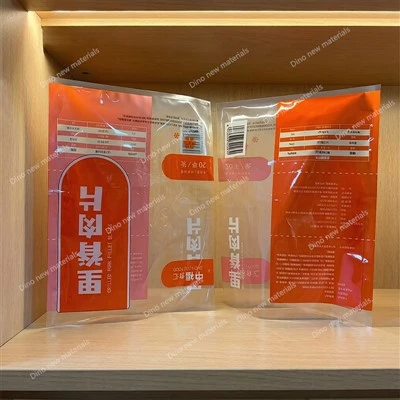
If you’re currently dealing with part damage, high material costs, or unreliable wrapping/insulating materials, let’s chat. We can walk through your specific needs, send you sample rolls, and figure out the right Cpp film solution for you. No sales pitches, no jargon, just someone who’s been in this game for years and knows what works. We’ve supplied Cpp film to everything from small startups to big Fortune 500 companies, so whether you need a 100-foot roll or a 10,000-foot bulk order, we’ve got you covered.
Flexible Bags References
- Industrial Packaging Association. (2022). “Biaxially Oriented Polypropylene Film: Applications and Performance Standards.”
- Electronics Industry Alliance. (2021). “Dielectric Materials for Compact Circuit Design.”
- Society of Automotive Engineers. (2020). “Protective Films for Automotive Component Shipping.”
- Sustainable Packaging Coalition. (2023). “Recyclability of Oriented Polypropylene Films.”
- International Organization for Standardization. (2022). “ISO 12086: Plastics – Films for Packaging – Test Methods for Tensile Strength and Elongation.”
Jiangsu Dino New Materials Technology Co., Ltd.
Address: South of Hangzhou Road and east of Hengshan North Road, Sihong Economic Development Zone, Sihong County, Suqian City, Jiangsu Province, China
E-mail: 19551836609@139.com
WebSite: https://www.jsdinuo.com/
