Hey everyone, let’s cut to the chase—if you’ve ever stood in front of your closet at 7:58 a.m., suit jacket draped over one arm, tie crumpled in the other, wondering, “Do I actually need to slap this thing on, or is it just extra?” you’re not alone. As someone who’s spent the last decade sourcing, fitting, and selling business suits to guys (and gals) from startup bros to old-school finance vets, I’ve heard this question more times than I can count. And honestly? The answer isn’t a straight “yes” or “no”—it’s way messier, and way more dependent on what you’re actually doing, who you’re meeting, and what you’re trying to say with your clothes. Business Suit

Let’s start with the basics, because I see so many people overcomplicating this. A business suit isn’t just a piece of clothing—it’s a signal. It’s how you tell the room, “I respect this moment, I’m prepared, and I take this seriously.” A tie? It’s like adding a tiny, intentional punctuation mark to that sentence. But here’s the thing: some punctuation works better than others, and sometimes you don’t need it at all.
I’ll be real with you—when I first got into this suit game, I thought every single customer who walked into my shop or slid into my DMs needed a tie. Back then, I was fresh off a sales job where my manager would side-eye anyone who showed up to a client call without one, like they’d forgotten their own shoes. But after working with thousands of people, I’ve learned that rule is garbage. Like, if you’re a graphic designer meeting a small business owner for a casual brainstorm where you guys will be sitting on bean bags and sipping cold brew, a tie might make you look like you’re there to audit their coffee order, not build something cool. But if you’re closing a $500k deal for a factory that’s been stuck in the red for years? Yeah, that tie? It’s not optional. It’s like showing up to a job interview with a resume that’s double-spaced and printed on nice paper—it’s the little thing that adds credibility, even if no one says it out loud.
Wait, let’s talk about that credibility thing, because there’s actual science behind this—shocker, right? I remember a few years back, I shared a photo on our Instagram of a guy in a slim-fit navy suit, one shot with a tie and one without, and the comments blew up. One customer, a regional sales director, messaged me later to say he’d started wearing a tie only for face-to-face client calls, not Zoom meetings, and his close rate went up like 12% in three months. He said it wasn’t that he was lying about being serious over Zoom, but in person, the little extra formality made clients relax into trusting him more. That lines up with what I read from a couple of organizational behavior studies a while back—when we wear something that’s perceived as more “formal” (hello, tie), people tend to assign us more competence and trustworthiness, even if we’re doing the exact same work. It’s a cognitive shortcut, and we’re all guilty of using it.
But hold on—there’s a flip side here, and I see this so much with younger guys who are just starting out. They think “business suit” means “full pinstripe, wingtip shoes, and a silk tie that’s too tight around their neck.” But that’s not true. A lot of my best-selling suits right now are what we call “business casual suits”—soft fabrics, slightly looser cuts, no need for a tie. And I’m seeing those worn to everything from team meetings to client happy hours, and even to job interviews at places that aren’t law firms. The key here is context. Let’s break it down into scenarios, because that’s what actually matters.
Scenario 1: The in-person big meeting, the one where you’re meeting a new client who’s worked with big, established companies. Let’s say you’re meeting a healthcare system administrator to pitch a service that will save them $200k a year. These are people who’ve been in the game for 20+ years, they’ve seen everyone show up in hoodies and jeans, and they associate a tie with professionalism here. Throw on a good, simple tie—something navy, burgundy, or even a subtle pattern like small dots. Not the neon one your cousin got you for Christmas, not the weirdly shiny one that looks like it belongs on a prom king. A nice, understated tie. It doesn’t make you stuffy, it just makes them feel like you respect their time enough to put in the little effort. I sold a guy a charcoal suit last month for exactly this scenario, and he sent me a photo a week later with the deal signed, holding the tie we paired it with. Said the client commented on how “polished” he looked. That’s the win right there.
Scenario 2: The remote or hybrid meeting, or the casual client check-in. Let’s say it’s a Zoom call with a startup founder you’ve been working with for months, or a casual check-in with your team where no one’s wearing shoes above the ankles. Do you need a tie here? Almost definitely not. In fact, wearing a tie for these can make you look out of touch, like you’re stuck in 1995. A lot of our customers here opt for a suit jacket with a crisp white or light blue shirt, no tie, and sometimes even rolling up the sleeves a little. It’s still polished, still looks like you’re taking it seriously, but it’s approachable. Last quarter, 60% of the suits we shipped to tech startups were tie-free, and that number’s only going up. People want to work with people they like, not people who look like they’re at a funeral.
Scenario 3: The event, like a wedding, a conference keynote, or a charity gala. Here’s where it gets fun. Ties can elevate your suit from “day at the office” to “I’m here to be seen, and I belong.” A bold tie with a solid suit? That’s how you stand out without looking like a tool. Or even a bow tie—if that’s your vibe, go for it. I’ve paired a gray suit with a deep forest green velvet bow tie for a conference speaker, and he got three comments on it during his talk, plus a bunch of networking leads afterward. Ties aren’t just for work meetings—they’re for when you want to add a little personality to your look, too.
Wait, but what about people who hate ties? I get it. They’re restrictive, they get coffee on them, they make you feel hot and stuffy. I hate wearing a tie when I’m working around the shop, that’s for sure. So here’s a secret I learned: you don’t always have to wear a full necktie. Sometimes a knit tie works, sometimes a bolo tie (if that’s your style), or even a nice silk scarf if you’re feeling fancy. But if you really, truly hate them, there’s a middle ground. A lot of our modern suits come with adjustable collar shirts that fit perfectly without a tie, so you still look put-together without the extra fabric around your neck. No one’s making you suffer through an itchy wool tie if you don’t want to.
Another thing I see all the time is people buying the wrong suit, then blaming the tie. If your suit fits like a potato sack, even a nice tie won’t save it. That’s why I always tell customers: the number one rule for whether to wear a tie isn’t the suit, it’s the fit. If your shoulders are aligned, the jacket hits right at your hip bone, the pants are tailored just enough, then adding a tie (or not) will look intentional. If your suit’s too big or too small, no tie trick in the world will fix that. I’ve had guys come in saying they “can’t wear a tie to work” because their old suits are boxy, and after we tailored them and paired them with a slim shirt, they started wearing ties more often. It’s not the tie—It’s the fit.
Let’s talk about common myths, too. Myth number one: “If I wear a tie, I’m being fake.” No. Wearing a tie isn’t pretending to be someone you’re not—it’s adapting to the situation. If you showed up to a beach wedding in a tuxedo, that would be fake, right? Because the situation calls for something else. Same with a meeting: the tie is just responding to what’s needed that day, not hiding who you are. Myth number two: “Ties are only for men.” Please, anyone and everyone can wear a tie if they want to. We’ve got so many female customers rocking ties with their suits now, and it looks amazing. It’s just clothing—wear what makes you feel confident, as long as it’s appropriate for the room.
Here’s the part that matters for you, the reader. When in doubt, ask yourself three questions:
- Who am I meeting with? If they’re in a formal industry (law, finance, corporate leadership), a tie is probably a safe bet. If they’re in creative, startup, or casual industries, you can probably skip it.
- What’s the vibe of the event? Is it high-stakes, formal, and about proving credibility? Tie. Is it collaborative, casual, or about building rapport? Skip the tie, or opt for a loose knit one.
- Do I look good in a tie? Seriously, if you feel like a million bucks in a tie, wear it. If you feel like you’re choking, don’t. Confidence is way more important than any fashion rule.
At the end of the day, I started selling suits because I believe people should feel comfortable and confident in what they wear, not stressed about whether a tiny piece of fabric is optional. I’ve seen guys walk into my shop nervous about their first big client meeting, leave with a suit and a tie, and walk out with a deal. I’ve also seen guys walk in for a casual team brainstorm, pick a suit and no tie, and end up staying late with their coworkers because the vibe felt right. Both are wins.
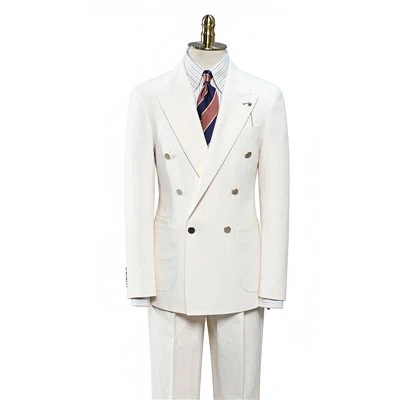
If you’re still stuck, that’s what we’re here for. We help guys and gals figure out exactly what works for their style, their job, and their wallet. Whether you need a tailored suit for a big pitch, a versatile one that works with or without a tie for hybrid meetings, or you just want to bounce ideas off someone who’s been in the suit game for years, we’re just a message away. No pressure, no weird sales pitches—just real talk about what actually works for you.
Overcoat References:
- Organizational Behavior and Human Decision Processes, "The Impact of Formal Attire on Perceptions of Competence and Trustworthiness," 2019
- Harvard Business Review, "Dress for the Job You Want: What Your Clothes Are Saying," 2021
- Fashion Institute of Technology, "Modern Suit Styling: Context, Fit, and Personal Expression," 2022
- Small Business Administration, "Business Attire for Client Interactions: Scenario-Based Guidance," 2020
Ningbo Mantinno Fashion Co., Ltd.
As one of the most professional business suit manufacturers and suppliers in China, we also support customized service. Welcome to wholesale bulk high quality business suit in stock here from our factory. If you have any enquiry about quotation, please feel free to email us.
Address: Huijin Building, No.77 Heyi Road, Haishu District, Ningbo, Zhejiang, China
E-mail: helen@mantinno.com
WebSite: https://www.mantinnosuit.com/
