If you’ve ever stood beside an industrial packaging line, a conveyor system sorting small goods, or a automated valve assembly in a water treatment plant, you’ve probably encountered a pneumatic actuator at work. These unassuming devices turn compressed air into motion—opening dampers, closing valves, or lifting heavy loads—and for anyone who’s ever had to size, troubleshoot, or specify these tools, there’s a question that comes up again and again: How do pressure and force actually connect here? As a supplier who’s spent 12 years walking shop floors with engineers, maintenance teams, and plant managers, I can tell you it’s not just a textbook equation; it’s the backbone of getting a pneumatic system to work reliably. Let’s break this down, no jargon overload, just the practical stuff that matters when you’re picking actuators for real jobs. Pneumatic Actuators

First, let’s start with the basics: what a pneumatic actuator is, and why pressure isn’t force. A lot of people mix these two up, and it’s an easy mistake. Pressure is just the amount of force applied over a given area, right? So if you have a compressed air system pushing air at, say, 100 pounds per square inch (psi), that’s pressure. Force is the actual push or pull you get out of the actuator when that air acts on a part inside it. That’s the key link—this is where the math steps in, but let’s make it tangible. Take the most common type of pneumatic actuator, the double-acting model. This one has a solid piston inside a sealed cylinder, and air is fed to both sides of the piston through two ports. When you send high-pressure air to one port, it pushes the piston along the cylinder; vent air out the other side, and the piston moves back. The force here is calculated by taking the pressure of that compressed air, times the area of the piston. That’s F = P × A, plain and simple. But here’s the catch: that piston’s area has to be accurate, because if you miscalculate even a little, you end up with an actuator that’s too weak to do the job, or worse, overbuilt and wasting energy.
Wait, let’s test this with a real example I saw last year. A food processing plant came to us because their old actuators kept failing to open a large butterfly valve that controls water flow to their mixing tanks. They’d been using a 120 psi air supply, and their old actuator had a 6-inch diameter piston. Let’s run the numbers: area of a circle is πr², so that’s 3.14 × (3 inches)², which is about 28.26 square inches. Multiply that by 120 psi, and you get around 3,391 pounds of force. But the plant’s valve only needed 3,000 pounds to open smoothly. Wait, why was it still failing? Turns out, they forgot about friction. The piston seals, the valve stem, and even the air itself compresses a tiny bit, so some of that force is lost before it gets to moving the valve. Their old actuator’s force was just barely enough on paper, but in practice, the friction ate up the extra, so it couldn’t overcome the valve’s resistance. We swapped them for a slightly larger piston, 7 inches, and suddenly they had 4,150 pounds of force—plenty to handle the friction, and the valves haven’t failed since. That’s the kind of thing that makes this relationship matter: it’s not just the math on a spec sheet, it’s accounting for the real-world stuff no textbook always mentions.
Then there’s the single-acting pneumatic actuator, the other big type. This one only has air pressure applied to one side of the piston; the other side uses a spring to push the piston back. That changes the pressure-force relationship a little, because now the spring is opposing the air pressure. Let’s say you need a single-acting actuator to close a safety valve automatically if the air supply drops. The spring is preloaded, so it exerts a constant force of, say, 2,500 pounds to keep the valve closed. When you supply air at 80 psi to the piston side, you calculate the force from the air, then subtract the spring force to get the net force available to open the valve. If your air pressure drops, that air force goes down, and the spring force takes over to close the valve—perfect for safety applications where you need a fail-safe. I’ve seen plant managers go wrong here all the time: they forget the spring, so they size the air pressure wrong, and the valve doesn’t close when it’s supposed to. That’s why when you’re talking to a supplier, you need to tell them not just the pressure, but also if the application needs a fail-safe spring.
Now, what affects this pressure-force link beyond the piston area and spring? A big one is friction in the actuator itself. Those rubber seals that keep air on one side of the piston are necessary, but they create drag. If the cylinder isn’t lubricated right, or if it’s got debris from old compressed air lines, friction goes way up. Another factor is air pressure itself—compressed air isn’t perfectly uniform, right? If your system has a lot of other tools running at the same time, the supply pressure can drop 10 or 15 psi from its rated 100 psi. That small drop can reduce your force by hundreds of pounds, which is enough to stop a heavy valve or conveyor in its tracks. We recommend adding a pressure regulator near the actuator, not just at the main compressor, so you can ensure the actuator gets a consistent, steady pressure. That’s a small add-on, but it makes the pressure-force relationship predictable every single time.
Let’s also clear up a common misconception: more pressure always equals more force, right? Not always. If you go above the actuator’s maximum operating pressure, you can damage the seals or even the cylinder. Every actuator has a pressure rating stamped on its body, usually around 150 psi for standard models, but some heavy-duty ones go higher. Push more air than that, and you’re not just wasting energy—you’re creating a safety hazard. Conversely, if you use too little pressure, you might get the force you need on small actuators, but for big jobs, you’ll end up with a weak push. Last month, a logistics company came to us needing actuators to move heavy pallets on a roller conveyor. They tried using 60 psi, and the actuators couldn’t move a full pallet. We upped the pressure to 90 psi, and the force jumped enough to move the pallets with no issues. It’s a balance, not a race to the highest numbers.
As a supplier, I’ve learned that the best conversations aren’t just about specs—they’re about understanding the application. A pharmaceutical plant needs actuators that are clean, no oil in the air, so we’ll recommend single-acting actuators with low-friction seals to keep force consistent. A mining operation needs actuators that can handle dust and heavy loads, so we’ll go with double-acting actuators with thicker cylinders that can hold up to high friction and pressure. Every job is different, so the pressure-force relationship has to be tailored to that job, not a one-size-fits-all number.
If you’re in the market for pneumatic actuators, don’t just look for a model that matches a pressure number. Tell us what you’re moving: the weight, the resistance (valves need to open against water pressure, for example), if you need a fail-safe, and what your air supply pressure is. That way, we can calculate the exact piston size, pressure, and actuator type that will give you the right force every time, no guesswork.
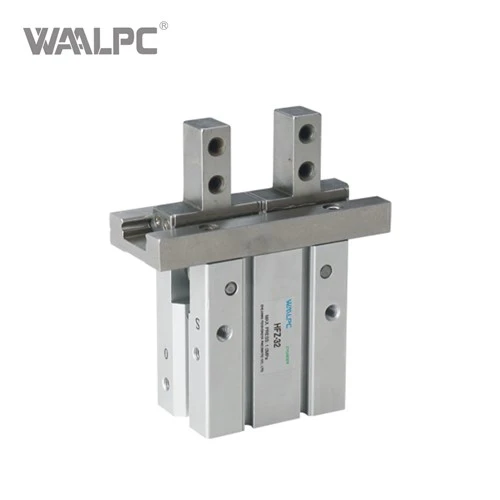
If you have questions about sizing actuators, troubleshooting a system that’s not delivering the force you need, or just want to talk through your application, reach out to our team to discuss your pneumatic actuator needs. We’re here to make sure you get the right solution for your operations, no jargon, no hidden fees, just reliable performance.
Solenoid Valve Parts References:
- Pneumatic Actuators: Principles and Applications, Industrial Press, 2021
- Compressed Air System Design for Industrial Automation, Taylor & Francis, 2019
- Fluid Power Handbook, National Fluid Power Association, 2020
- Practical Guide to Pneumatic and Hydraulic Systems, Elsevier, 2018
- Actuator Sizing Basics for Industrial Applications, Professional Engineering Publishing, 2022
Hangzhou Evershine Pneumatic Import & Export Co., Ltd.
Hangzhou Evershine Pneumatic Import & Export Co., Ltd. is one of the most professional pneumatic actuators manufacturers and suppliers in China, featured by high quality pneumatic components. Please rest assured to wholesale bulk durable pneumatic actuators from our factory. Welcome to contact us for custom service and OEM service.
Address: Hengkun Smart Industrial Park, No.176, Golf Road, Yinhu Street, Fuyang District, Hangzhou City, Zhejiang Province, China 311400
E-mail: Felix@waalpc.com
WebSite: https://www.evspneu.com/
