Alright, let’s cut through the noise—if you’re a CNC turning machine owner or someone shopping for one, you’ve probably stared at a part drawing thinking: “Wait, can I drill holes on this thing without hauling it to a mill or renting time at a shop?” As a CNC turning machine supplier, I get this question all the time. Not just from new operators confused about their machine’s full bag of tricks, but from old hands who’ve been turning parts for decades and haven’t bothered to unlock every feature their machine has. Let’s break this down straight, no corporate jargon, no fancy fluff. CNC Turning Machine
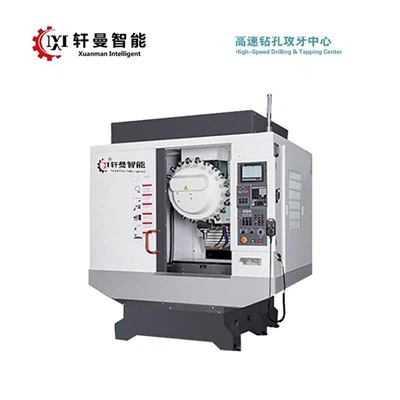
First off, let’s ground this: a basic CNC turning machine’s main gig is spinning a bar of metal (or plastic, brass, whatever) while a cutting tool moves along the X and Z axes to turn cylinders, tapers, grooves, that classic lathe stuff. Drilling is usually associated with mills—moving a spinning drill bit vertically or horizontally into a stationary workpiece, right? But here’s the thing: most modern CNC turning machines (especially the ones we supply) don’t work like your old manual lathe. They have what’s called a live tool attachment (or live tooling, for short) and a C-axis. Wait, what’s that? Let’s dumb it down: the C-axis lets you lock the spindle that’s spinning your workpiece so it doesn’t rotate—like freezing a top mid-spin. And live tooling? That’s small, motorized tools held in the turret (the part where you swap cutting tools) that spin on their own, separate from the workpiece. So instead of only turning the workpiece, the turret can bring over a drill bit, spin it up, and push it straight into the stationary workpiece. That’s drilling—on a lathe.
But hold up, I don’t want to mislead anyone—you can’t drill every hole like this, and it’s not the same as a dedicated drill press. Let’s get into the limits first, because if you skip that, you’ll end up with broken bits, messed up parts, and a grudge against your machine. First, the size of the drill bit. Most live tooling setups on standard turning machines handle bits up to… let’s say 12mm (half an inch) max. If you need a 25mm (1-inch) hole, that’s not going to happen with live tooling—you’d have to do that on a mill first, then bring it to the lathe for secondary operations. Then there’s the hole position. Live tool drilling on a lathe works best for holes that are perpendicular to the main turning axis—so holes going straight through the side of a cylinder, right? Want a hole that’s at a 45-degree angle? Sure, if you have a Y-axis (some premium turning machines have that, not just X and Z), but that’s an upgrade, not standard. And holes along the centerline of the workpiece? Wait, you can drill there on a lathe—usually called “center drilling” or “axial drilling”—but you’re not using live tooling for that. You use a drill that’s mounted in the tailstock, like you did on your old manual lathe. Oh, right—tailstock drilling is another thing people forget about! I’ve seen guys with brand new CNC lathes ditch the tailstock entirely, thinking live tooling does everything, but no—axial drilling (holes along the length of the bar) is way easier with a tailstock-mounted drill, no live tool setup needed.
Now, why would you even want to drill on a turning machine instead of a separate drill or mill? That’s the big question. Let’s talk efficiency. When you’re making a part that needs both turned features and drilled holes, you don’t have to move it between machines. Moving a part means more setup time, more chance of human error (like clamping it wrong and getting misaligned holes), more floor space taken up by two machines, and longer lead times for you. For example, if I’m making a small automotive part: a cylindrical housing that needs a turned outer diameter, a groove on the inside, and two 8mm holes drilled through the side. If I send it to a mill, that’s 20 minutes of setup, clamping, checking alignment, then another 10 minutes drilling. On our CNC turning machine, I load the bar once, turn the OD, cut the groove, swap to a live drill in the turret, drill both holes, unload the part—total time, 12 minutes. That’s 18 minutes saved per part, and no risk of misalignment because the workpiece never moves. Small stuff like that adds up fast. I have a customer who makes bicycle parts—they used to run 10 different parts through a mill and a lathe, now they run all of them on one of our 8-axis turning centers, and their production time dropped 40% in the first month. That’s not a marketing line—that’s a real call I got last week.
But wait, let’s talk about the times it doesn’t make sense. If you’re making a single custom part, and you only need one tiny hole, renting time at a local drill press is way cheaper than buying live tooling for your lathe. Live tooling adds cost to the machine upfront—we’re talking 15-25% more for a machine with full live tooling, so if you’re only doing 10 drilled parts a year, it’s not worth it. Also, if you need deep holes—like a hole that’s 5x the diameter of the drill bit (a 10mm drill going 50mm deep)—live tooling on a lathe can have issues with rigidity. The turret isn’t as rigid as a mill’s spindle, so the drill can wander, or you’ll get a wobbly hole. For deep holes, a dedicated gun drill on a mill is better. And if you need multiple holes at weird angles, a mill with 5 axes is still your best bet—don’t try to force that on a lathe, you’ll regret it.
Now, let’s get into the nitty-gritty of how it actually works, because a lot of new operators hear “live tooling” and panic like it’s rocket science. It’s not. Let’s walk through a simple setup. First, you program the part in your CNC software (we work with all the big ones: Mastercam, SolidWorks, Fusion 360, whatever you use). For axial drilling (holes along the center): you use the tailstock, input the drill size, the depth, and the program tells the tailstock to advance the drill exactly to that depth, no guesswork. For radial drilling (holes through the side): you switch the spindle to C-axis mode, so it locks the workpiece in place, indexes it to the exact angle you need (like 0 degrees for horizontal, 90 for vertical), then the turret moves the live drill bit to the X position where the hole is, spins the drill, and feeds it into the workpiece. The only catch is you have to make sure the turret has enough clearance—you don’t want the drill hitting the chuck or the workpiece. That’s why our machines come with 3D simulation software that shows you exactly where the tools will move, so you can avoid crashes before they happen. We’ve had too many customers blow a $500 drill bit and scratch a $1000 workpiece because they skipped the simulation—we include that software for free, no extra charge, because we don’t want you making that mistake.
I should also mention a common misconception: people think drilling on a lathe will ruin the surface finish, but that’s only if you’re using a bad drill or not paying attention to feeds and speeds. Our technical team trains every customer on the right feeds and speeds for drilling with live tooling—for example, drilling aluminum is way different than drilling steel, and if you crank the feed too high, the bit will grab and break. But once you get the settings right, the hole finish is actually pretty good—no need for a lot of secondary deburring, though you might want to run a countersink on the edge of the hole to clean it up.
Wait, let’s throw in a real example from our shop, since I’m a supplier and I see this every day. A customer came to us last quarter, he was making small medical implants—tiny titanium parts that needed turned threads and two 3mm holes. He had a basic turning machine, no live tooling, so he was sending all the parts to a local machine shop for the drilling. That was adding 2 days to his lead time, and he was paying $15 per part for the drilling. He upgraded to one of our mid-range turning machines with live tooling, programmed the drilling himself (we walked him through it in a 2-hour training session), and now he does the drilling in-house for 50 cents per part, same quality, same day turnaround. He just placed a reorder for 3 more machines because he’s picked up two new contracts since making the switch. That’s the value of knowing your machine can do more than just turning.
Now, let’s address the elephant in the room: can any CNC turning machine do this? No. A basic, entry-level CNC lathe without a C-axis and no live tool attachment? Nah, you’re stuck with turning and tailstock center drilling. But almost all mid-range and premium turning machines that we supply come standard with at least basic live tooling and a C-axis, because that’s what most small to medium manufacturers need. If you’re shopping for a new turning machine, don’t just ask “does it have live tooling?”—ask “how many live tool stations does it have?” (more stations mean you can do more operations without swapping tools), “can it do Y-axis moves?” (that’s for angled holes), and “what’s the maximum speed for live tools?” (higher speed is better for hard materials like stainless steel).
Here’s the thing I always tell customers: your CNC turning machine isn’t just a lathe. It’s a multi-tasking machining center that can handle turning, milling, drilling, tapping, even part marking—all in one setup. But you don’t have to use every feature, but it’s good to know what’s possible, because when you have a tight deadline or a part that’s giving you trouble, unlocking those extra functions can save you hours, money, and headaches.
Wait, let’s circle back to the original question: Can a CNC turning machine be used for drilling? The short answer is: Yes, if it has the right add-ons (C-axis and live tooling for radial drilling, tailstock for axial drilling), and it works best for smaller holes, perpendicular holes, and parts where you need to minimize setup. It’s not a replacement for a dedicated drill press or mill, but it’s a powerful secondary function that makes your shop more efficient.

Now, if you’re someone who’s got questions about your current turning machine, or you’re in the market for a new one and want to know if drilling capabilities fit your workflow, don’t overthink it. The worst thing you can do is buy a machine that’s too basic and then realize you need live tooling down the line—upgrading later is way more expensive than getting it upfront. Our team is here to help you figure out exactly what you need, no pressure, no salesy nonsense. We don’t care if you end up buying one of our machines or not—we just want you to make a smart investment that works for your parts.
CNC Drilling Machine If you’re tired of moving parts between machines, paying for outside drilling, or dealing with misaligned holes, reach out to us to chat through your needs. We’ll walk you through options, show you how drilling works on our machines, and make sure you get exactly what you need for your production. Don’t guess—let’s talk.
References
- “CNC Turning Centers: Multi-Tasking Capabilities and Applications,” Modern Machine Shop, 2022.
- “Live Tooling 101: What It Is and How It Works,” CNC Machining Journal, 2023.
- “Drilling on CNC Lathes: Best Practices for Accuracy and Efficiency,” Manufacturing Engineering, 2021.
- “Key Considerations When Choosing a CNC Turning Machine for Small Batch Production,” Industry Week, 2022.
Jiangsu Xuanman Intelligent Equipment Co., Ltd.
We’re well-known as one of the leading CNC turning machine manufacturers in China, featured by quality products and low price. Please rest assured to buy discount CNC turning machine made in China here from our factory. We also accept customized orders.
Address: No. 1-1, Weier Road, Jieji Equipment Manufacturing Industrial Park, Sihong County, Suqian City, Jiangsu Province, China
E-mail: jsxmzn@163.com
WebSite: https://www.xm-cnc.com/
