If you’ve ever stood near a row of utility distribution boxes on a quiet residential street at dusk, you’ve probably heard that low, steady hum—faint at first, but persistent enough to stand out when all other ambient noise has faded. As a distribution box supplier, I get asked about this hum all the time: can it be fixed? Should it be? And more importantly, what are the actual, practical noise-reduction requirements that matter for these boxes, beyond just cutting down on annoying sound? Let me break this down from the perspective of someone who designs, tests, and ships these boxes to communities across the country, because it’s not a one-size-fits-all rule—it’s a balance of engineering, regulation, and real-world use. Distribution Box
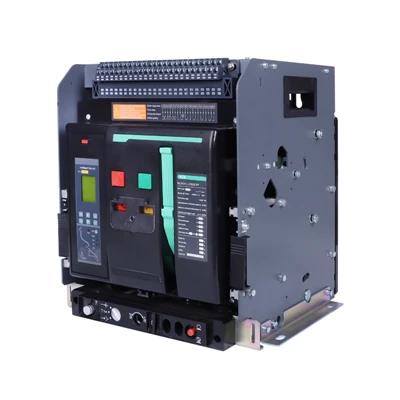
First, it’s important to clarify what generates noise in a distribution box in the first place. Most of these boxes house circuit breakers, transformers, bus bars, and cooling fans—components that vibrate when electricity flows through them. That vibration turns into sound, which travels through the metal of the box and out into the surrounding area. The noise is rarely loud enough to be a public safety hazard, but it can become a nuisance in dense neighborhoods, near schools, hospitals, or senior living facilities. That’s where noise-reduction requirements come in: they’re not arbitrary rules, they’re guidelines designed to keep communities happy while still making sure these boxes do their job of delivering reliable power.
Let’s start with the most common regulatory baseline, because that’s the first thing any supplier has to adhere to. In the U.S., the Occupational Safety and Health Administration (OSHA) sets workplace noise limits, but distribution boxes are usually located in public or semi-public areas, so most municipalities follow the standards set by the Institute of Electrical and Electronics Engineers (IEEE) or the International Electrotechnical Commission (IEC). For residential areas, the typical daytime noise limit is 55 decibels (dB) and 45 dB at night, measured from the property line of the nearest home. To put that in perspective: 55 dB is roughly the sound of a normal conversation, and 45 dB is like quiet rainfall. That’s the threshold we have to hit for most installations, and it’s non-negotiable for working with cities and utilities.
But here’s the catch: those are just the baseline numbers. Some areas have stricter requirements, especially if they’re near sensitive facilities. For example, a distribution box next to an elementary school might need to max out at 40 dB during school hours, because kids are more sensitive to background noise that can disrupt classrooms. Near a hospital, nighttime noise levels might drop to 40 dB total, because patients need to rest. As a supplier, we don’t just build a box to the generic 55/45 dB rule—we work with our client (whether that’s a municipal utility or a private power company) to get site-specific noise requirements before we design a box for them. That’s the part most people don’t see: noise reduction isn’t a add-on, it’s part of the initial design, not an afterthought.
Now, how do we actually meet these requirements? It’s not just covering the box with foam (though that’s part of it)—it’s a series of engineering steps that take into account the source of the noise, the path it takes, and how it escapes the box. The main noise sources in a distribution box are magnetic vibration from the transformer, vibration from circuit breakers tripping or operating, and fan noise from cooling systems (which are needed to keep components from overheating, especially in hot climates). So our noise-reduction measures target each of these separately.
For transformers, which are responsible for about 60% of the typical box’s noise, we use what’s called “magnetostriction-compensated” cores. That means the core is made of specialized electrical steel that expands and contracts less when electricity runs through it, which cuts down on the inherent vibration before it even starts. We also mount transformers on rubber or neoprene isolators—think of them as small, heavy-duty sponges that absorb vibration before it travels through the box’s metal shell. For some of our larger boxes, we line the interior of the box with acoustic foam that’s rated for electrical use, so it absorbs sound waves before they bounce around and escape. But here’s a key point: we never use foam that could catch fire or interfere with electrical components, so all our acoustic materials are UL-listed for electrical enclosure use.
Circuit breakers are a smaller noise source, but they can add up, especially in boxes with several breakers. We mount breakers on flexible bus bars instead of rigid ones, which reduces the vibration transferred from the breaker to the box. We also add small damping pads between breakers and the box wall to catch any remaining vibration. For boxes that have to be near residential areas, we might even specify low-noise circuit breakers that have been tested to operate with less vibration than standard models.
Fans are another tricky part. In the past, we used standard axial fans for cooling, but those can be loud, especially when they’re running at full speed in hot weather. Now, we use variable-speed fans that adjust their speed based on the internal temperature of the box. When the box is cool (which is most of the time), the fan runs slowly, producing almost no noise, and only ramps up when the temperature hits a set threshold. We also mount fans on flexible brackets and add small shrouds around them to reduce air turbulence, which cuts down on fan noise even further.
But noise-reduction requirements don’t just stop at the sound of the box in operation. There’s also the noise of installation and maintenance, which is often overlooked. When our boxes are being lifted into place or wired at a residential site, we have to make sure that any temporary noise from that process doesn’t violate local rules, too. We provide our clients with installation guides that specify the best times to work (avoiding early morning or late evening) if the box is near homes, and we design our boxes to make maintenance quieter: for example, using tools that fit existing mounting points without having to hammer or pry, which creates sharp, loud noises that can be a nuisance.
As a supplier, we also have to test every box we build to make sure it meets noise requirements. We don’t just rely on computer simulations—we do real-world testing in an anechoic chamber, a room that’s designed to absorb all sound, so we can measure exactly how much noise a box produces from every angle. We also do field testing at client sites, where we place sound level meters at the property line of the nearest home and record noise levels over a 24-hour period to make sure they match the requirements. If a client has a stricter noise rule than the baseline, we can adjust the design: for example, adding an extra layer of acoustic lining, using a larger, slower fan, or even enclosing the transformer in a secondary metal shell lined with foam.
There’s a common misconception that noise reduction for distribution boxes means sacrificing performance or reliability. But that’s not the case. When we design a box for low noise, we don’t cut corners on electrical safety or cooling—we just optimize for noise without compromising function. For example, if we line the interior of the box with acoustic foam, we make sure there’s still enough air flow to keep components cool, even in extreme heat. If we use vibration isolators for the transformer, we make sure they’re rated to hold the weight of the transformer and last for 20+ years, no matter the weather.
Another thing that comes up with noise requirements is long-term noise, not just the day it’s installed. Over time, components wear out, which can make noise increase. That’s why we design our boxes with easy access to components, so utilities can replace parts like fans or isolators before they start making too much noise. We also use durable materials that don’t degrade as they age, so the noise level stays consistent over the lifespan of the box, which is typically 25 to 30 years.
Let me give you a real example of this in action. A couple of years ago, we worked with a utility in a suburb of Chicago that was replacing old distribution boxes in a neighborhood with strict nighttime noise rules. The original boxes made 50 dB at night, which was just over the 45 dB limit. We designed a custom box for them: we used a magnetostriction-compensated transformer, mounted it on heavy rubber isolators, added two layers of acoustic lining, and used a variable-speed fan. When we tested it, the box produced 42 dB at the nearest property line at night—well under the limit. The utility was happy because the box was still reliable, and the neighborhood was happy because the hum that had kept some residents up at night was gone.
For our team as a supplier, understanding noise-reduction requirements isn’t just about checking a box to get a sale. It’s about balancing the need for reliable power with the quality of life for the communities where our boxes live. That’s why we don’t just sell standard boxes—we work with each client to figure out their specific needs, whether that’s a quiet box for a downtown neighborhood, a robust box for a rural area where noise isn’t a big concern, or a box that meets strict hospital noise rules.
Distribution Box If you’re a utility manager, a city planner, or someone looking for a distribution box that meets specific noise requirements, we’re here to help. We can walk you through the design process, do the necessary testing, and make sure the box you get is reliable, compliant, and quiet enough for your community. We understand that every site is different, and we’re committed to finding the right solution that works for you and the people who live near the box.
Wenzhou Lanen Electrical Co., Ltd.
Wenzhou Lanen Electrical Co., Ltd. is one of the most professional distribution box manufacturers and suppliers in China, also supports customized service with low price. Please feel free to buy CE approved distribution box made in China here from our factory. Contact us for more discount information.
Address: Zhiguang Liushi Town Yueqing City Wenzhou City Zhejiang Province
E-mail: lanen@luyele.cn
WebSite: https://www.lanenelectrical.com/
