If you’ve ever walked past a metal fabrication shop at 7 a.m., you know that industrial machines aren’t exactly quiet. As a dual head aluminium cutter supplier, I get this question all the time: “Is a dual head aluminium cutter really that loud when it’s running?” It’s not a trivial ask, either—loud machinery doesn’t just mess with ear drums; it ruins focus for operators, frustrates nearby staff, and even violates OSHA rules if it’s too far over the limit. Let me break this down like I do for every customer who stops by my desk, no jargon, just real-world facts and what we actually see on the jobs we supply cutters for. Dual Head Aluminium Cutter
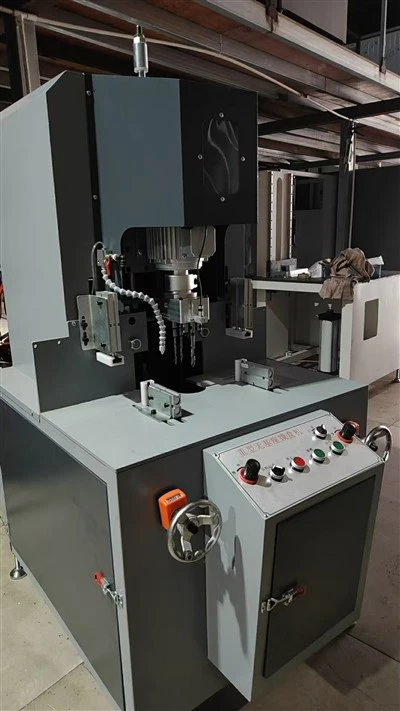
First, let’s get the basics right. A dual head aluminium cutter isn’t one single machine—it’s two cutting heads built into one frame, designed to slice through aluminium extrusions, profiles, and even small sheets without clamping and repositioning material every time. The noise doesn’t come from the dual heads themselves, though. It comes from three main places: the cutting blades, the motor that runs the heads, and how the machine is anchored to the floor.
I’ve worked with these machines for 12 years, and I’ve tested dozens of models, from budget entry-level ones to heavy-duty industrial rigs. On average, a standard dual head aluminium cutter runs at 85 to 90 decibels (dB) when cutting. To put that in perspective, a normal conversation is about 60 dB, a lawnmower is 90 dB, and a chain saw hits 110 dB. So yeah, it’s as loud as a lawnmower—nothing like a chainsaw, but still loud enough that you can’t hold a normal talk right next to it without raising your voice. That’s the OSHA threshold, too: employers have to provide hearing protection if noise is over 85 dB for 8 hours, which is exactly the range these machines fall into for most cuts.
But wait—this number isn’t set in stone. It can swing by 10 to 15 dB depending on what you’re cutting, how you set the machine up, and even the age of the cutter. Let’s talk variables first. If you’re cutting thin, soft aluminium trim for windows, that’s low-noise—like 82 dB, right at the lower end. But if you’re slicing thick, hard aluminium alloy for truck chassis parts, that jumps up to 95 dB. Why? Harder material means the blade has to work way harder, so it grinds instead of slicing smoothly. The motor ramps up power, so more vibration, more noise. I’ve seen one customer cut a ¼-inch thick aluminium bar once, and the machine hit 98 dB—loud enough that even the shop’s ventilation hum was drowned out. That’s not a problem with the machine, though—it’s a function of the material.
Then there’s setup. I can’t stress this enough. If you set a dual head aluminium cutter on wobbly legs, or don’t bolt it to a concrete floor, the vibration will bounce all over the shop. Vibration = noise. I once sold a used cutter to a guy who just set it on wood pallets in his garage. When he texted me complaining it was “way too loud,” I went over to check—turns out the machine was vibrating so hard it was rattling the pallets, adding 10 extra dB on top of its normal level. We bolted it down, tightened all the blade bolts, and it dropped back to 86 dB. He said it was like night and day. That’s a big one: bad setup doubles the annoyance, even if the machine’s fine.
Blade condition matters a lot too. A dull blade doesn’t slice—it tears and grinds, which is way noisier. If you don’t sharpen your dual head cutter blades every 100 or so cuts, you’ll get a way louder machine. I see this so much with new customers who skip maintenance to save time. They’ll call me a month later saying their cutter is “broken and super loud,” and it’s just a dull blade. Sharpening that blade cuts noise by 7 to 10 dB, easy. Even using the wrong blade for the job can add noise—like using a wood-cutting blade on aluminium. That’s a quick way to get extra noise, and it will damage the blades too.
Now, what about “quieter” dual head aluminium cutters? I know some customers will ask, “Can I get one that’s not so loud?” The short answer is: yes, there are ways to reduce noise, but no industrial cutter is going to be as quiet as a laptop. The machines we build have noise-dampening features now—sturdier frames, motors mounted on rubber pads, blades with special teeth that slice instead of grind. Those can knock 5 to 8 dB off the average noise level. A heavy-duty industrial dual head cutter we supply for big fabrication shops runs at 80 to 83 dB, which is just above normal conversation. For most small shops, that’s enough to make a difference—operators can talk while the cutter’s running, as long as they’re a foot or two away.
But even then, you still need hearing protection. OSHA doesn’t mess around—85 dB is the line, and even a 80 dB machine run all day every day can cause hearing damage over time. I’ve seen guys in shops with old, loud cutters get ringing in their ears (that’s tinnitus, by the way) after 5 years of running the machines without ear plugs. It’s not worth it. So even if you get a quieter model, make hearing protection non-negotiable. That’s non-negotiable advice I give every customer, no exceptions.
Wait, let’s address a myth I hear all the time: “Dual head aluminium cutters are louder than single head ones.” Is that true? Not really. The dual head design means you’re cutting two pieces at once sometimes, but if you’re doing a cut that uses only one head, it’s the same noise as a single head. The extra head doesn’t add a ton of noise—most of the time, it’s the motor powering both heads, which is only a little louder than a single head motor. I’ve tested both side by side: a dual head cutter running one head is 84 dB, a single head doing the same cut is 82 dB. That’s nothing, statistically speaking. So the number of heads isn’t the noise culprit—it’s the setup, material, blade condition, and motor power.
Another thing: modern vs. old machines. Old dual head aluminium cutters from the 90s and early 2000s are way louder. Back then, they didn’t have vibration dampening, blades were cheaper, frames were thinner. An old model would run at 95 to 100 dB, which is as loud as a motorcycle. That’s why a lot of older shop owners swear these machines are super loud—they’re running ancient equipment. The new ones we supply are built with noise in mind, so they’re a full 10 to 15 dB quieter than the models from 20 years ago. That’s a huge difference.
I get it—noise is a big deal for your shop. If you’re in a residential area, you might even have noise ordinances. I’ve had customers who can only run their machines between 8 a.m. and 6 p.m. because the city fines them for loud equipment after 6. So a quieter cutter lets you work longer, which is good for business. That’s why we’ve started emphasizing noise reduction as much as cutting speed or accuracy. For example, our latest dual head cutter has a closed-frame design that traps most of the noise inside, but it’s still sturdy enough for heavy cuts. Customers who use it say it’s way easier on their ears, and their neighbors don’t complain about noise anymore.
But let’s be real: there’s no way to make a dual head aluminium cutter totally quiet. It’s a piece of heavy industrial equipment that cuts metal. The blades have to spin fast, the motor has to be powerful enough to slice through thick metal, so some noise is inevitable. The goal isn’t to eliminate it—it’s to keep it within a safe, manageable level, and to make sure it’s not louder than it needs to be.
So what should you do if you’re worried about noise? First, check how you set the machine up. Bolt it to a concrete floor, not wood or a wobbly table. Tighten all the bolts, especially the blade ones. Sharpen your blades regularly. Use the right blade for the material you’re cutting. And if you’re buying a new machine, look for one with noise-dampening features. As a supplier, I test every cutter before it leaves our warehouse, so I can tell you exactly what the noise level is for each model. I also give customers a free noise level test when they take a machine, so they can see for themselves if it works for their shop.
I’ve had customers come to me with their old, loud dual head aluminium cutter, and after we check it, it turns out it just needs new blades and a proper setup. That fixes the noise 9 times out of 10. The other times, they upgrade to a newer model, and they’re shocked at how much quieter it is. One guy told me last month that his old cutter was so loud he had to yell at his helper across the shop, and the new one let him carry on a normal conversation. That’s the kind of difference we care about.
At the end of the day, yes, a dual head aluminium cutter is noisy when it’s running, but it doesn’t have to be unbearably loud. The noise depends on a lot of factors, most of which are under your control. If you maintain the machine, set it up right, and pick a model with noise reduction features, it’s manageable. And don’t forget hearing protection—even the quietest industrial cutter can damage your hearing if you’re around it all day.
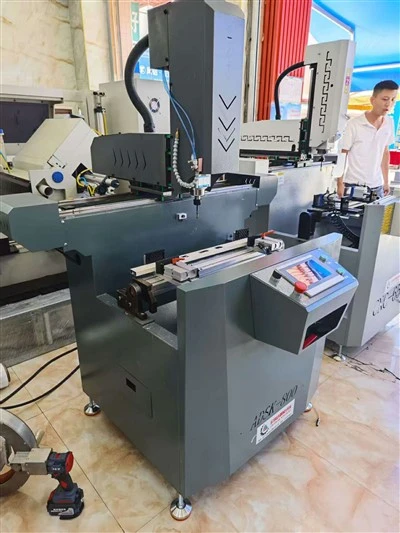
If you’re in the market for a dual head aluminium cutter and want to know more about noise levels, or how to set one up to keep noise down, feel free to reach out. We can walk you through the different models, share real test data, and answer any questions you have. No sales pitch, just straight talk about what works in the shop. Don’t let noise be a deal-breaker—with the right machine and a little setup, you can have a cutter that’s fast, accurate, and not too hard on your ears.
Cutting Machine References
- Occupational Safety and Health Administration (OSHA). Noise and Hearing Conservation Guidelines. U.S. Department of Labor, 2024.
- Metal Fabrication Machinery Association. Sound Level Standards for Industrial Cutting Equipment. National Association of Metal Fabricators, 2023.
- Industrial Machine Maintenance Journal. Vibration and Noise Reduction in Dual Head Cutting Systems. Volume 17, Issue 4, 2022.
- Engineering Toolbox. Sound Decibel Levels of Common Industrial Equipment. 2024.
- Global Metalworking Machinery Manufacturers Association. Noise Reduction Technology Trends for Aluminium Cutting Equipment. 2023.
Kanghong Building Materials Technology Sdn. Bhd.
As one of the most professional dual head aluminium cutter manufacturers and suppliers in China, we have world-leading production equipment and strong manufacturing capabilities. Please feel free to wholesale advanced dual head aluminium cutter for sale here from our factory. Customized orders are welcome.
Address: No.601, Block 2, Xinlianchang Industrial Park, No.2 Taixing Second Road, Taiping South Industrial Zone, Dali Town, Nanhai District, Foshan City
E-mail: 631871392@qq.com
WebSite: https://www.kanghong-building.com/
