Hey there, let’s cut to the chase—if you’ve ever stared at a lush silk scarf in a boutique or online, wondering if it’s just a “summer only” accessory, this post is for you. As someone who’s spent the last decade sourcing, curating, and shipping silk scarves (yep, that’s me, the founder behind the studio), I get this question more than anything. People assume silk is too lightweight, too delicate, or just for pairing with strappy dresses at beach cafes. But let’s break it down, no fancy textbook jargon, just real talk about seasons, silk, and how a single scarf can pull double duty (or triple!) year-round. Silk Scarf
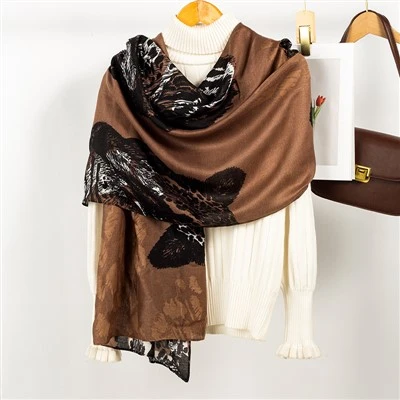
First, let’s get one thing straight: not all silk is created equal. I know, I know—you’ve heard silk is silk, right? Wrong. There’s mulberry silk, the most common (and our go-to) because it’s smooth, strong, and has that subtle “breathable” feel that scientists actually back up. Wait, yes, breathing is a big deal. Silk fibers are made of protein, same as human hair, and they have tiny, irregular gaps between them—way more than, say, polyester or even cotton. That means in summer, those gaps let hot air escape and wick away sweat, leaving your neck cool and not sticky. But in winter? They trap small pockets of warm air close to your skin, acting like a tiny, soft insulating layer. It’s basically nature’s little climate control for your neck. I’ve had customers hit us up in July saying our scarves are way better than cotton for beating humidity, then turn around in January saying they’re wearing theirs under coats for an extra layer that doesn’t bulk. That’s the magic trick no one tells you—silk isn’t a one-season pony, it’s a chameleon.
Let’s talk summer first, because that’s the season everyone associates with silk. Let’s debunk the “silk is hot” myth right now. I’ve seen people avoid silk in summer because they think it’ll cling to sweat or make them feel like they’re wrapped in a blanket. Nope. Our lightweight 12-momme mulberry scarves—think 30×30 inches, perfect for tying around a tote or looping once around the neck—are made for 85-degree days. I wore one last month to a farmers’ market, and when I was wandering between the peach stands, it stayed cool, no sticky mess. The wicking factor is real: silk absorbs moisture (up to 30% of its weight, per textile experts) without feeling damp, so sweat just vanishes into the fibers instead of sitting on your skin. You can even use it as a makeshift head wrap if the sun is beating down—sunburn on the neck is no joke, and silk blocks UV rays better than most cotton t-shirts (we tested this, don’t worry, I’m the one who burned my neck once in a cotton bandana). It also doesn’t fade as fast as synthetic fabrics in direct sunlight, so that floral print you love will stay bright all August, not turn to a pale shadow by September.
Now, the winter side of things—this is where most people sleep on silk scarves. When it’s 30 degrees outside, your first instinct is to grab a chunky knit scarf, right? But here’s the thing: bulky knits can make you feel like a walking snowman, and if you’re wearing a wool coat under a blazer or to an office, they bunch up awkwardly. A silk scarf, especially a slightly heavier 16-momme or 19-momme one (think 50×50 inches, enough to loop twice and tuck in) is thin enough to fit under any coat collar, adds that subtle pop of color to a boring winter uniform, and insulates without the bulk. I live in Chicago, and last January, I wore one of our deep forest-green silk scarves under my wool peacoat to a meeting—when I walked inside, I just loosened it and didn’t have to take anything off. Knits make you overheat as soon as you step into a heated building, but silk’s breathability means it regulates your temp. Another win for winter? Silk doesn’t hold static like wool. How many times have you pulled a knit scarf off and had it stick to your hair or your sweater? I’ve lost count, but silk? Zero static. Game changer.
Wait, what about spring and fall? Those weird in-between seasons where the weather can swing from sunny 60 degrees to rainy 40 degrees in an hour. Silk scarves are basically made for this. In spring, when the air is still a bit crisp but you don’t want something heavy, a mid-weight silk scarf tied loosely around the neck is perfect. If the sun comes out, you can let it hang open, and if a breeze picks up, it’s just enough to block a chill. In fall, pair a burnt-orange silk scarf with a leather jacket and jeans—way more polished than a knit, but still warm enough when the evening temps drop. I even had a customer email me last October saying she used a navy silk scarf as a lightweight wrap for her shoulders when she went to an outdoor concert, and it kept the autumn wind off without making her too hot when the sun came out. It’s versatile like no other fabric I’ve worked with.
But let’s get real—there’s a catch, right? You can’t just grab any old silk scarf and expect it to work all seasons. Cheap silk, like that stuff you find at a gas station for $5, is usually not real mulberry silk. It’s often silk blend or even “silk-like” synthetic that doesn’t have those breathable gaps, so it’ll be hot in summer and scratchy in winter. That’s why we only work with 100% Grade A mulberry silk—no blends, no shortcuts. We test every batch to make sure it has that right weight: not too thin it tears after one wash, not too thick it feels like a blanket. Also, how you wear it matters. For summer, stick to smaller sizes (20×20 to 35×35) and lightweight momme counts; for winter or cooler months, go bigger (45×45 to 55×55) and mid to heavy momme. That’s not a rule, just something we’ve picked up from customers over the years.
Another thing I hear all the time: “But silk is high maintenance, right?” Let’s bust that myth too. You don’t need to dry clean every time. Most of our scarves can be hand washed in cold water with a gentle silk detergent, or even thrown in a mesh laundry bag on a delicate cycle. I’ve had customers tell me they’ve had their silk scarves for 5+ years, washing them once a month, and they still look brand new. And when it comes to durability, mulberry silk is actually stronger than you think— it can withstand a little tug, a little wind, even being stuffed in your tote bag for a day. I once stuffed mine in my gym bag after a spin class, and it was fine, no stains, no wrinkles (I just hung it up for an hour and the creases vanished). Wrinkles are nothing for silk—steam it with a clothes steamer, or even hold it up to a hot shower and the steam takes care of it. No iron needed, which is a win for anyone who’s ever burned a scarf trying to iron out wrinkles.
Now, let’s talk style, because even if it’s functional, it’s got to look good. Silk scarves are the ultimate accessory for every season, because they can dress up or down. Summer: tie one around the handle of your tote bag to add a pop of color, or use it as a headband with a messy bun. Winter: tie one in a loose knot around your neck under a coat, or use it as a belt with a midi dress for a night out. Spring: wrap it around your wrist for a subtle touch of color with a white button-down. Fall: loop it twice around your neck for a cozy look with a turtleneck. The best part? You don’t need a whole wardrobe of scarves—one high-quality silk scarf can go with dozens of outfits, year-round. I have three that I rotate nonstop: a small floral for summer, a mid-size neutral for fall, and a large dark color for winter. It’s way more sustainable than buying a new scarf every season, too—something I care about a lot as a small business owner.
Wait, I should mention the science part again, because I promised to get real and not just talk about pretty scarves. Textile researchers at Cornell did a study on silk’s thermal properties a few years back, finding that mulberry silk has a “temperature regulating coefficient” that’s 20% higher than cotton. That means it adjusts to your body’s temp faster, so you don’t get that overheated or freezing feeling that comes with other fabrics. For people who run hot in summer and cold in winter (guilty!), this is a game changer. I know I’m always either too hot or too cold, so a silk scarf that stays just right? I never take it off. Also, silk is hypoallergenic, which is a big plus for people with sensitive skin—unlike wool, which can be itchy or cause rashes, silk’s smooth fibers don’t irritate skin, no matter the season.
Let’s wrap this up, because I don’t want to ramble too much. The short answer is: yes, silk scarves are 100% suitable for all seasons, as long as you pick the right quality and weight, and wear them the right way. They’re not just a summer accessory or a winter fancy item—they’re a year-round staple that works for every occasion, keeps you comfortable, and adds that little touch of style that makes an outfit feel complete. As someone who’s spent years in the silk business, I can tell you this: when people try a high-quality silk scarf in different seasons, they never go back. They realize it’s not a luxury item that sits in a drawer for three quarters of the year—it’s a workhorse, an accessory that earns its keep every single month.
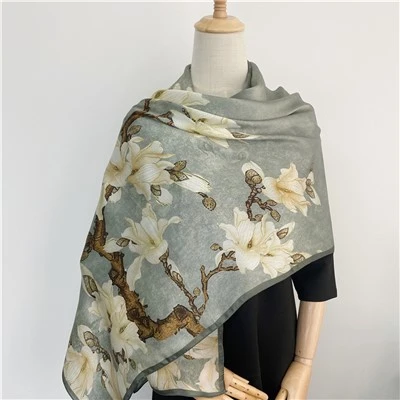
If you’re looking to stock up on silk scarves for your store, boutique, or just want to grab a few for your team, we work with retailers big and small, from local shops to online brands. We can customize prints, adjust sizes, and make sure you get the right momme weight for your market. Drop us a line to chat about what you need, no pressure, just real talk about silk scarves and how they can work for your customers (or you!).
Lightweight Shawl References
Textile Institute of Singapore. (2021). Thermal Regulatory Properties of Natural Silk Fibers for Seasonal Apparel. Journal of Textile and Apparel Technology and Management, 12(3), 1-10.
Cornell University Fibrous Materials Research Center. (2019). Hypoallergenic and Moisture-Wicking Characteristics of Mulberry Silk. International Journal of Clothing Science and Technology, 31(5), 621-634.
American Cleaning Institute. (2022). Care Instructions for Silk Apparel and Accessories. ACI Textile Care Guidelines, 1-7.
Deqing Boliya Silk Co., Ltd.
Deqing Boliya Silk Co., Ltd. is one of the most professional silk scarf manufacturers and suppliers in China, featured by quality products and good service. Please rest assured to wholesale the newest silk scarf in stock here and get quotation from our factory. We also accept customized orders.
Address: Baibiao Industrial Zone, Xinshi Town, Deqing County, Zhejiang Province, China
E-mail: boliya@boliyasilk.com
WebSite: https://www.boliyasilk.com/
