Yo, folks! As a supplier of SWIR (Short-Wave Infrared) sensors, I often get asked about the power consumption of these nifty devices. So, I thought I’d take a deep dive into this topic and share what I’ve learned. SWIR Sensor
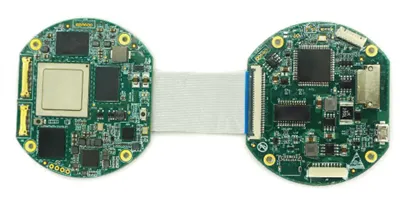
First off, let’s talk about what SWIR sensors are and why power consumption matters. SWIR sensors are used in a wide range of applications, from industrial inspection to environmental monitoring. They can detect light in the short-wave infrared spectrum, which is invisible to the human eye. This makes them super useful for tasks like detecting defects in materials, monitoring crop health, and even in some security applications.
Now, power consumption is a big deal. In today’s world, where energy efficiency is a top priority, knowing how much power a SWIR sensor uses can make or break a project. For example, if you’re using a SWIR sensor in a battery-powered device, high power consumption means shorter battery life. And if you’re using it in a large-scale industrial application, high power usage can lead to increased operating costs.
So, what factors affect the power consumption of a SWIR sensor? Well, there are a few key ones.
Sensor Design and Technology
The design and technology of the SWIR sensor play a huge role in its power consumption. Different types of SWIR sensors use different materials and manufacturing processes, which can have a significant impact on how much power they draw.
For instance, some SWIR sensors are based on InGaAs (Indium Gallium Arsenide) technology. These sensors are known for their high sensitivity and wide spectral range. However, they can also be relatively power-hungry. On the other hand, there are newer sensor designs that use more advanced materials and architectures to reduce power consumption while maintaining good performance.
Operating Mode
The operating mode of the SWIR sensor also affects its power consumption. There are two main operating modes: continuous mode and pulsed mode.
In continuous mode, the sensor is constantly active, continuously collecting data. This mode is useful for applications where real-time monitoring is required, such as in industrial inspection. However, it also consumes more power because the sensor is always running.
In pulsed mode, the sensor is only active for short periods of time. This can significantly reduce power consumption, especially in applications where data doesn’t need to be collected continuously. For example, in some environmental monitoring applications, the sensor can be pulsed on and off at regular intervals to conserve power.
Integration Time
Integration time is another factor that affects power consumption. Integration time refers to the length of time the sensor accumulates light to generate a signal. A longer integration time means the sensor can collect more light, which can improve the signal-to-noise ratio. However, it also means the sensor has to be active for a longer period of time, which increases power consumption.
So, how much power do SWIR sensors typically consume? Well, it really depends on the specific sensor and its operating conditions. Some low-power SWIR sensors can consume as little as a few milliwatts, while high-performance sensors used in demanding applications can consume several watts.
Let’s take a look at some real-world examples to give you a better idea.
Example 1: Industrial Inspection
In an industrial inspection application, you might use a SWIR sensor to detect defects in a manufacturing process. Let’s say you’re using a mid-range SWIR sensor in continuous mode with a relatively short integration time. This sensor might consume around 100 – 200 milliwatts. If you switch to pulsed mode, you could potentially reduce the power consumption to around 50 – 100 milliwatts.
Example 2: Environmental Monitoring
For an environmental monitoring application, like monitoring the health of crops, you might use a low-power SWIR sensor in pulsed mode. This sensor could consume as little as 10 – 20 milliwatts, which is great for battery-powered devices.
Now, as a SWIR sensor supplier, I understand that power consumption is just one of the many factors you need to consider when choosing a sensor. You also need to think about things like sensitivity, resolution, and cost. That’s why we offer a wide range of SWIR sensors to meet different needs and budgets.
If you’re in the market for a SWIR sensor and want to learn more about power consumption and how it might affect your application, don’t hesitate to reach out. We have a team of experts who can help you choose the right sensor for your specific requirements. Whether you’re working on a small-scale project or a large industrial application, we’ve got you covered.
MWIR Thermal Imager 640 In conclusion, understanding the power consumption of a SWIR sensor is crucial for making informed decisions. By considering factors like sensor design, operating mode, and integration time, you can choose a sensor that meets your performance needs while keeping power consumption in check. So, if you’re interested in our SWIR sensors, drop us a line and let’s start a conversation about how we can help you with your project.
References
- Smith, J. (2020). "Advances in SWIR Sensor Technology." Journal of Sensor Science.
- Johnson, A. (2019). "Power Management in SWIR Sensors." Proceedings of the International Conference on Sensor Applications.
Xi’an Zhongke Lead Ir-Tech Co., Ltd.
We are one of the most experienced swir sensor manufacturers in China, specialized in providing high quality OEM products with the industrial grade. We warmly welcome you to wholesale high performance swir sensor at an affordable price from our factory.
Address: Building 8,Hard Technology Enterprise Community No.3000,Biyuan 2nd Rd,High-Tech Zone Xi’an,Shaanxi,China
E-mail: sales@lead-ir.com
WebSite: https://www.leadinfrared.com/
